Picture this: you’ve parked your car under the blazing summer sun. Inside, the temperature is skyrocketing, turning your dashboard into a veritable oven. You get back in, start the engine, and… nothing. Your dash cam, your silent electronic witness, has succumbed to the heat. It’s a frustrating and all-too-common scenario. Finding the Best Dash Cam For Hot Weather isn’t just a luxury; it’s a critical necessity for drivers in sun-drenched regions. A device that can’t handle the heat is a device you can’t rely on when it matters most.
This guide is your roadmap to finding a dash cam that won’t melt under pressure. We’ll break down the tech, demystify the jargon, and show you exactly what to look for to ensure your investment keeps you protected, drive after drive, no matter how high the mercury climbs.
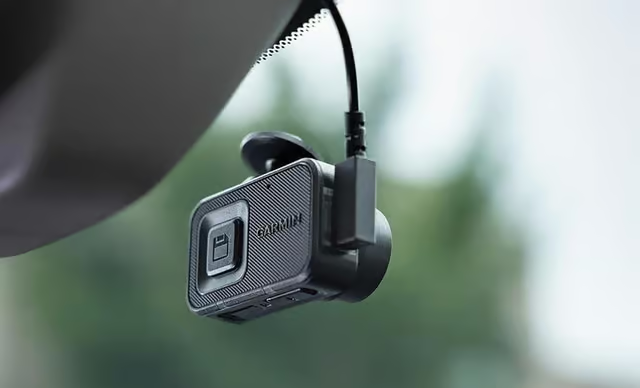
Why Your Dash Cam Hates the Heat (And Why You Should Care)
Think of your dash cam as a small, dedicated computer constantly running while exposed to the most extreme temperature swings your car experiences. When a car is parked in direct sunlight, the interior can reach temperatures of 130°F (55°C) or even higher. This intense heat is the arch-nemesis of consumer electronics.
Here’s what happens to a standard dash cam in extreme heat:
- Battery Failure: Most common dash cams use lithium-ion (Li-ion) batteries. When exposed to high heat, these batteries degrade quickly, lose their ability to hold a charge, and in worst-case scenarios, can swell or even leak, posing a fire risk.
- Component Damage: The internal processor, image sensor, and circuit boards can be permanently damaged by sustained high temperatures, leading to fuzzy video, random shutdowns, or complete device failure.
- Physical Deformation: The plastic housing can warp, and the adhesive on the mount can fail, causing your camera to fall off the windshield at the worst possible moment.
Ultimately, a heat-damaged dash cam is an unreliable one. It might fail to record a critical incident, leaving you without evidence for an insurance claim or a legal dispute.
The Secret Ingredient: Supercapacitors vs. Lithium-Ion Batteries
So, how do you find a dash cam that can take the heat? The answer lies in its power source. This is arguably the single most important factor when choosing the best dash cam for hot weather.
Lithium-Ion Batteries (The Bad)
These are the same type of batteries found in your smartphone. They’re great for storing a lot of power but have a major weakness: a low tolerance for extreme temperatures, both hot and cold. They are the primary point of failure for dash cams in hot climates.
Supercapacitors (The Good)
A supercapacitor isn’t a battery in the traditional sense. It stores a small amount of energy just long enough to safely save the last video file after you turn off your car. Its superpower is its incredible resilience to temperature extremes.
As our automotive technology specialist, John Carter, often says, “For drivers in hot climates, a supercapacitor isn’t a feature; it’s a non-negotiable requirement. It’s the difference between a dash cam that lasts for years and one that might not survive its first summer.”
Here’s a quick breakdown:
| Feature | Supercapacitor | Lithium-Ion Battery |
|---|---|---|
| Heat Tolerance | Excellent (up to 176°F / 80°C) | Poor (degrades above 113°F / 45°C) |
| Lifespan | Much longer (hundreds of thousands of cycles) | Shorter (a few hundred charge cycles) |
| Safety | Very safe, no risk of swelling or fire | Potential risk of swelling or leaking |
| Power Storage | Stores enough power to save files | Can run the camera for a few minutes |
The choice is clear. For reliability in the sun, a supercapacitor-powered dash cam is the only way to go.
Key Features for the Best Dash Cam for Hot Weather
Beyond the power source, several other features contribute to a dash cam’s performance in high temperatures.
High Operating Temperature Range
Every dash cam has a specified operating temperature range listed in its specs. Look for a model with a maximum operating temperature of at least 158°F (70°C). This number tells you that the manufacturer has designed and tested the internal components to withstand serious heat.
High-Endurance microSD Card
Your dash cam is only as reliable as its storage. Constant recording and rewriting, combined with intense heat, can destroy a standard microSD card. You absolutely need a high-endurance card specifically designed for this kind of workload. These cards are built to handle extreme temperatures and the constant read/write cycles of a dash cam, preventing corrupted files and recording failures. [Learn more about choosing the right microSD card for your dash cam].
Discreet Design and Color
This might seem like a small detail, but it matters.
- Color: A black dash cam will absorb more heat than a gray or silver one.
- Form Factor: A smaller, more compact dash cam that tucks neatly behind the rearview mirror is less exposed to direct sunlight. Wedge-shaped or cylindrical designs are often more discreet than those with large screens.
Advanced Parking Mode
If you want surveillance while your car is parked, a heat-resistant dash cam is even more critical. Parking mode means the camera is left running or on standby in a hot, sealed car for hours. The best dash cam for hot weather will have a capacitor and a thermally-protected parking mode that can automatically shut down if the internal temperature exceeds a safe threshold, protecting the device from damage.
Installation and Usage Tips to Beat the Heat
Even with the right hardware, a few smart practices can extend the life of your dash cam.
- Mounting Location: Place the dash cam behind your rearview mirror. This area is often slightly shaded and may have a tinted or dotted section on the windshield that helps block some UV rays.
- Cable Management: Route the power cable along the headliner and down the A-pillar. A clean installation prevents cables from being exposed to direct sunlight, where they can degrade over time.
- Use a Sunshade: When parked for an extended period, using a reflective sunshade makes a massive difference. It can lower your car’s interior temperature significantly, reducing stress on all your electronics, including your dash cam.
- Allow for Airflow: If possible, crack your windows slightly (if safe to do so) to allow hot air to escape, reducing the greenhouse effect inside your car.
Frequently Asked Questions (FAQ)
Q: Can a regular dash cam with a battery survive in a hot car?
A: It might for a while, but its lifespan will be drastically shortened. The lithium-ion battery will degrade with each heat cycle, leading to poor performance and eventual failure. There is also a safety risk associated with batteries swelling in extreme heat.
Q: What are the signs that my dash cam is overheating?
A: Common signs include random reboots, frozen screens, corrupted video files, beeping alerts, or the device simply refusing to turn on. If you notice any of these, it’s a strong indicator of heat-related issues.
Q: Is a higher video resolution like 4K more prone to overheating?
A: Yes, it can be. Recording in 4K requires more processing power, which generates more internal heat. A well-designed 4K dash cam built for hot weather will have better heat dissipation, but it’s a factor to consider. For many users, a reliable 1080p or 2K camera is more than sufficient.
Q: Do I need a dash cam with a screen?
A: Not necessarily. Many of the most heat-resistant and discreet models are “screenless.” They use Wi-Fi to connect to an app on your smartphone, where you can view footage and change settings. Fewer components, like a large LCD screen, can mean better heat management.
Q: What is the most important feature to look for in the best dash cam for hot weather?
A: Hands down, a supercapacitor. This is the core technology that separates a heat-resilient dash cam from one that’s destined to fail. Always check for this feature first before considering anything else.
Your Reliable Witness, Rain or Shine
Choosing a dash cam is an investment in your peace of mind. It’s your impartial witness in an accident, your protection against fraud, and your tool for capturing the unexpected. In a hot climate, that peace of mind is shattered if your device can’t handle the heat.
By prioritizing a supercapacitor, a high operating temperature rating, and a high-endurance memory card, you’re not just buying a gadget; you’re investing in reliability. Don’t let your silent witness go silent when the sun is beating down. Equip your vehicle with the best dash cam for hot weather and drive with the confidence that you’re covered, no matter the forecast.