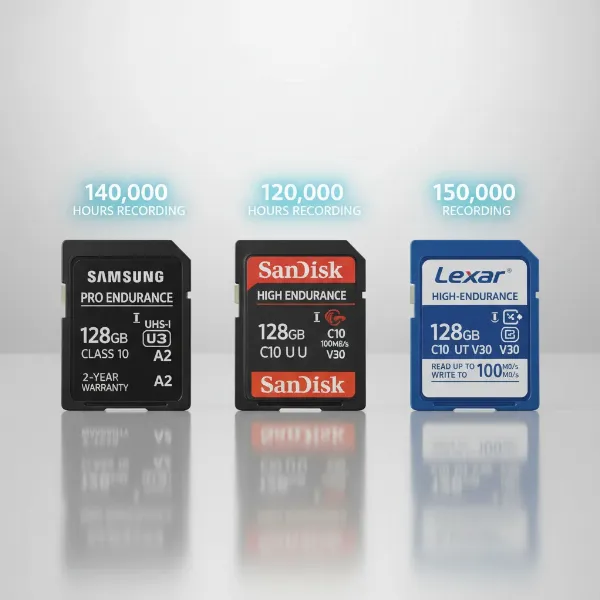
Stepping into 2026, the humble dash cam has transformed from a simple recording device into a sophisticated guardian for your vehicle, offering peace of mind and crucial evidence on the road. With new technologies emerging at a rapid pace, choosing the right dash cam can feel overwhelming. This guide, informed by over a decade of hands-on experience in the dash cam industry, will demystify the latest innovations and help you identify the essential features to prioritize for unparalleled safety and convenience on every journey.
Understanding the Types of Dash Cams for Modern Drivers
The first step in selecting your ideal dash cam is understanding the various configurations available. Each type offers distinct advantages tailored to different needs and driving scenarios.
Front-Facing Dash Cams
These are the most basic and common type, focusing solely on the road ahead. They are typically compact and discreet, offering straightforward installation and operation.
- Pros: Most affordable, simplest installation, minimal windshield obstruction.
- Cons: Limited coverage, no protection for rear or cabin incidents.
- Ideal for: Drivers primarily concerned with front-end collisions or recording scenic drives without needing extensive surveillance.
|
Our Picks for the Best Dash Cam in 2026
As an Amazon Associate I earn from qualifying purchases.
|
||
| Num | Product | Action |
|---|---|---|
| 1 | Dash Cam Front and Rear, 2.5K Dual Dash Camera for Cars, 2560P Mini Car Camera, 2 inch IPS Screen, 32GB Card Included, WDR Night Vision, 24 Hours Parking Monitor, G-Sensor, Support 256 GB Max |

|
| 2 | Dash Cam Front and Rear, 1080P Dash Camera for Cars, 3 Channel Car Camera Front Rear and Inside with 32GB Card, Loop Recording, Night Vision, HDR, 24Hr Parking, G-Sensor |
|
| 3 | REDTIGER 4K Dash Cam Front Rear, STARVIS 2 Sensor, Free Card Included, 5.8GHz WiFi-20MB/s Fast Download, Dash Camera for Cars with GPS, WDR Night Vision, 170°Wide Angle, 24H Parking Mode(F7NP) |
|
| 4 | 4K Dash Cam Front, Built-in 5G WiFi, 64GB Card Included, Dash Camera for Cars, Mini Dashcam with Super Night Vision, Loop Recording, G-Sensor, 24 Hours Parking Monitor, Support 256GB Max |
|
| 5 | 4K+4K Dash Cam Front and Rear, Free 128GB Card Included, 5.8GHz WiFi Dash Camera for Cars, Built-in GPS, G-Sensor, 170°Wide Angle, 3" IPS Screen, 24H Parking Mode, Support 512GB Max |
|
| 6 | Garmin Dash Cam™ Mini 3, Ultracompact 1080p HD Dash Cam with a 140-degree Field of View, Built in Clarity™ Polarizer, Voice Controlled, Automatic Recording |
|
| 7 | Dual 4K Dash Cam Front and Rear - Free 64G SD Card, 2160P+2160P UHD Dash Camera for Cars, Dashcam with 176°+160° Wide Angle, 3.5'' IPS Screen Dashcam, G-Sensor, WDR, Night Vision, 24H Parking Monitor |
|
| 8 | ROVE R2-4K DUAL Dash Cam Front and Rear, STARVIS 2 Sensor, FREE 128GB Card Included, 5G WiFi - up to 20MB/s Fastest Download Speed with App, 4K 2160P/FHD Dash Camera for Cars, 3" IPS, 24H Parking Mode |
|
| 9 | WOLFBOX G840S 12" 4K Mirror Dash Cam Backup Camera, 5.8GHz WiFi Smart Rearview Mirror for Cars & Trucks, Front and Rear View Dual Cameras, Night Vision, Parking Assistance, Included 32GB Card & GPS |
|
| 10 | VIOFO A229 Plus Dash Cam Front and Rear, Dual STARVIS 2 Sensors, 2 Channel HDR, 1440P+1440P Voice Control Car Dash Camera, 5GHz Wi-Fi, Voice Control, Ultra-Precise GPS |
|
Front and Rear (Dual-Channel) Dash Cams
Offering enhanced protection, dual-channel systems record both the front and rear views of your vehicle. The rear camera often connects to the main unit via a cable and is mounted on the rear windshield.
- Pros: Comprehensive external coverage, crucial for rear-end collisions and hit-and-runs while parked.
- Cons: More complex installation with cable routing, slightly higher cost.
- Ideal for: Most drivers seeking broader incident protection, especially valuable for city driving or frequent highway travel.
Front, Cabin, and Rear (Triple-Channel) Dash Cams
Popular among rideshare drivers and those who want complete vehicle surveillance, triple-channel dash cams add an interior-facing camera to capture activity within the cabin.
- Pros: Full 360-degree external and internal coverage, essential for rideshare security, and useful for documenting interior incidents.
- Cons: Highest cost, most involved installation, can be more visually prominent.
- Ideal for: Rideshare or delivery drivers, parents monitoring teen drivers, or anyone requiring maximum coverage for both external and internal events.
360-Degree Dash Cams
A newer innovation, 360-degree dash cams typically feature a single main unit with a rotating lens or multiple wide-angle lenses to capture a panoramic view around the vehicle. Some can even rotate to track motion.
- Pros: Eliminates blind spots, offers versatile recording angles, and some models include AI tracking for enhanced security.
- Cons: Can be bulkier, file sizes are very large, and often come at a premium price.
- Ideal for: Drivers who desire comprehensive, all-around surveillance from a single device, particularly for parking protection and detailed incident recreation.
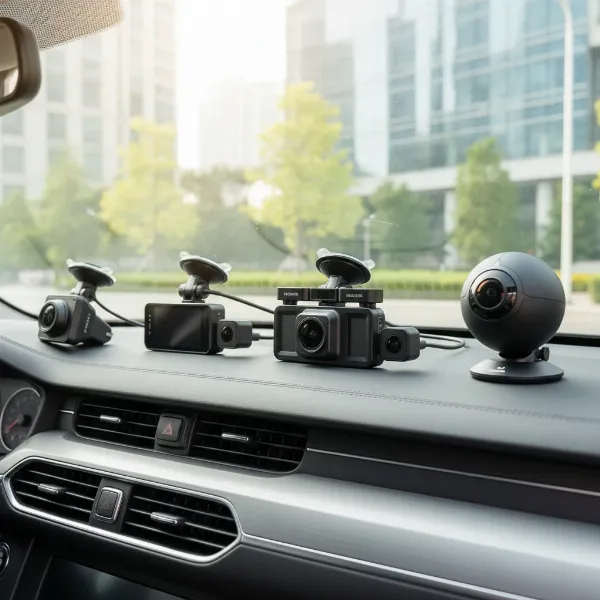 Various types of dash cams for cars including front, dual, triple, and 360-degree models in 2026, illustrating diverse coverage options.
Essential Features to Prioritize in Your 2026 Dash Cam
As dash cam technology advances, certain features have become indispensable for optimal performance, reliability, and security.
Unrivaled Video Quality: Beyond Just 4K
The clarity of your dash cam footage is paramount. In 2026, simply stating “4K” isn’t enough; you need to look deeper into the technology.
- Resolution: While 1080p remains a baseline, 4K (2160p) is now the standard for crisp, detailed recordings, crucial for identifying license plates, road signs, and faces. Some premium models are even pushing towards 8K capabilities.
- Frame Rate: Aim for a minimum of 30 frames per second (fps), with 60fps being ideal for smoother video, especially at higher speeds, which helps reduce motion blur and capture fast-moving details more effectively.
- Advanced Sensors: High-quality image sensors, such as Sony STARVIS 2 (e.g., IMX678, IMX675) or IMX-415, are critical. These sensors significantly improve low-light performance, dynamic range, and overall image fidelity.
- HDR/WDR: High Dynamic Range (HDR) or Wide Dynamic Range (WDR) technology is essential for balancing exposure in challenging lighting conditions, such as driving directly into sunlight or transitioning from bright daylight to dark tunnels. This ensures details are preserved in both bright highlights and deep shadows.
- Bitrate Importance: High resolution alone doesn’t guarantee quality. A higher bitrate (bits per second) ensures more data is captured, leading to clearer video, especially in complex scenes with a lot of movement or detail.
Crystal Clear Vision in Any Light: Advanced Night Mode
Driving at night or in low-light conditions presents significant challenges for cameras. Modern dash cams excel with enhanced night vision capabilities.
- Improved IR Sensors: Advanced infrared sensors work to capture clearer, more detailed footage in near-darkness.
- AI Brightness Adjustment & Noise Reduction: AI algorithms now intelligently adjust brightness and reduce digital noise, resulting in significantly sharper and cleaner night recordings.
- Emerging Technologies: Some cutting-edge models are incorporating thermal imaging or Near-Infrared (NIR) and Short-Wave Infrared (SWIR) technologies for superior performance in extreme low-light, fog, or heavy glare.
Intelligent Surveillance: Parking Mode and Security
Your dash cam should protect your vehicle even when you’re not driving. Advanced parking modes offer robust security features.
- Motion Detection: The camera activates and records when motion is detected around your parked vehicle.
- G-Sensor (Impact Detection): Automatically triggers recording if an impact or sudden shock is detected, ensuring critical moments before and after an incident are saved.
- Time-Lapse Recording: Captures continuous footage at a very low frame rate (e.g., 1 frame per second) to save storage space while providing a full overview of activity.
- Hardwiring: For reliable 24/7 parking surveillance, hardwiring the dash cam to your vehicle’s fuse box is often required. This ensures a constant power supply without draining your car’s battery.
- Radar Integration: Some premium models, like the Thinkware U3000 Pro, use radar to detect approaching motion before an impact, allowing the camera to start recording earlier and capture more context.
Seamless Connectivity and Data Management
Efficiently managing and accessing your footage is crucial. Modern dash cams offer advanced connectivity and storage solutions.
- Cloud Storage: Direct upload of footage to the cloud provides instant access from any device and acts as a secure backup, protecting recordings even if the dash cam is damaged or stolen. Many offer subscription services for extended cloud retention and remote live view.
- High-Speed Wi-Fi: 5GHz Wi-Fi or Wi-Fi 6 enables faster transfer of large video files to your smartphone, making it quick and easy to review and download footage.
- Large Storage Support: Dash cams in 2026 support microSD cards up to 512GB or even 1TB, accommodating the large file sizes of 4K video. Internal storage with unlimited cloud backup is also an option.
- Loop Recording & Emergency Lock: Loop recording continuously overwrites the oldest unprotected files, ensuring uninterrupted recording. The G-sensor automatically locks critical footage during an incident to prevent it from being overwritten.
Smart Driving with AI-Powered ADAS
Artificial Intelligence (AI) and machine learning are revolutionizing dash cams, transforming them into proactive safety tools through Advanced Driver Assistance Systems (ADAS).
- Forward Collision Warning (FCW): Alerts you if you’re approaching the vehicle in front too quickly, helping to prevent rear-end collisions.
- Lane Departure Warning (LDW): Notifies you if your vehicle drifts out of its lane unintentionally.
- Pedestrian & Cyclist Detection: Provides warnings when pedestrians or cyclists are detected in your path.
- Blind Spot Detection: Some systems can help monitor blind spots, enhancing overall situational awareness.
- Front Vehicle Start Alerts: Useful in traffic, these alerts notify you when the vehicle ahead has started moving.
- Predictive Alerts: AI can analyze driving patterns and traffic conditions to provide real-time, predictive warnings, reducing driver stress and improving safety.
> “AI-powered alerts elevate dash cams from passive recording devices to active safety companions, giving drivers crucial moments to respond and reduce the likelihood of an accident.”
Hands-Free Control and Intuitive Design
User experience is key, and modern dash cams prioritize ease of use to minimize driver distraction.
- Voice Control: Allows you to control the dash cam with simple voice commands (e.g., “start recording,” “take photo,” “save video”), keeping your hands on the wheel and eyes on the road.
- Gesture Control: Some advanced models are exploring gesture-based commands for seamless interaction.
- Compact and Discreet Designs: Smaller, sleeker designs ensure the dash cam doesn’t obstruct your view or draw unwanted attention. Screenless designs, managed via a smartphone app, are also popular for a stealthier look.
- User-Friendly Apps: Companion smartphone apps offer intuitive interfaces for adjusting settings, viewing live footage, and downloading recordings quickly.
Built to Last: Durability and Power Solutions
A dash cam is an investment in safety, and its reliability, especially in extreme conditions, is paramount.
- Supercapacitors vs. Batteries: Supercapacitors are increasingly preferred over traditional lithium-ion batteries due to their superior heat resistance and longevity, making them ideal for vehicles exposed to hot climates. They provide enough power to safely save recordings upon power loss.
- Robust Construction: Look for dash cams built with high-quality, durable materials that can withstand vibrations and temperature fluctuations.
- Temperature Tolerance: Ensure the dash cam specifies a wide operating temperature range to function reliably in both intense summer heat and freezing winter conditions.
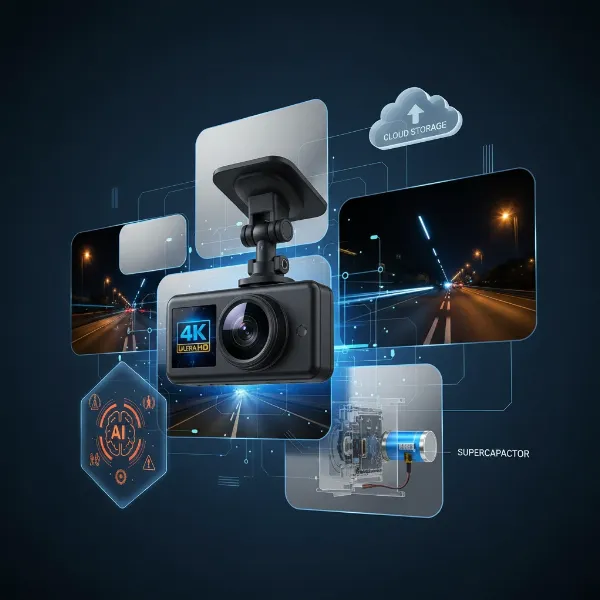 A collage illustrating key dash cam features for 2026: 4K video, night vision, cloud storage, AI alerts, and a supercapacitor for durability.
The Future is Now: Emerging Dash Cam Technologies
Beyond the established features, 2026 brings exciting advancements that push the boundaries of what dash cams can do.
Deeper Vehicle System Integration
Future dash cams are designed for seamless integration with your vehicle’s existing systems. This includes connecting to Advanced Driver Assistance Systems (ADAS) for more cohesive safety features, syncing with infotainment systems for on-screen viewing and control, and even potential LiDAR integration for enhanced depth perception, aligning with autonomous driving trends.
Personalized Features via Machine Learning
Machine learning enables dash cams to adapt to individual driving styles and preferences. This can lead to customizable alerts based on your driving history, predictive maintenance reminders by analyzing vehicle behavior, and automatic tagging of critical events for easier review of recordings.
Eco-Friendly Dash Cams
As sustainability becomes a global priority, dash cam manufacturers are exploring greener solutions. This includes energy-efficient designs that consume less power, the use of recyclable or biodegradable materials, and the emergence of solar-powered dash cams that reduce reliance on your car’s battery.
Conclusion
Choosing the ideal dash cam for 2026 requires a discerning eye, focusing on features that offer the most reliable protection and advanced functionality. From crystal-clear 4K video powered by advanced sensors and robust night vision to intelligent AI-driven ADAS and seamless cloud connectivity, the latest generation of dash cams provides unparalleled security on the road and while parked. Prioritizing features like supercapacitors for durability and professional installation for optimal performance ensures your investment truly safeguards your journeys.
Don’t let the vast array of options intimidate you. By understanding these key features, you’re empowered to select a dash cam that not only meets your needs but also provides crucial peace of mind. What specific dash cam feature are you most excited to integrate into your daily drive?
Frequently Asked Questions
What resolution is recommended for a dash cam in 2026?
For 2026, a minimum of 1440p (2K) resolution is recommended, with 4K (2160p) becoming the standard for optimal clarity. Higher resolutions significantly improve the ability to capture fine details like license plates and road signs, which is crucial for evidence in the event of an incident. Look for cameras with high-quality image sensors and strong bitrates to ensure true video fidelity, not just a high pixel count.
Do 2026 dash cams offer cloud storage, and is it worth it?
Yes, many 2026 dash cams offer cloud storage, often as an optional subscription service. It is highly recommended because it provides a secure off-device backup, meaning your footage is safe even if the camera is stolen or damaged. Cloud storage also allows for remote viewing, instant access to clips, and easy sharing with authorities or insurance companies, significantly enhancing convenience and security.
How important is night vision for new dash cams?
Night vision is extremely important, especially if you drive frequently after dark or in low-light conditions. Modern dash cams feature enhanced infrared sensors, AI-driven brightness adjustments, and noise reduction technology to deliver clear, detailed footage even in dimly lit environments. This ensures that critical incidents happening at night are recorded with the same clarity as daytime events, making your Dash Cam a reliable witness around the clock.