The road ahead is constantly evolving, and so too is the technology designed to keep us safe on it. Gone are the days when a dash cam was merely a passive recorder of events. Today, these intelligent devices have transformed into sophisticated co-pilots, integrating Artificial Intelligence (AI) and Advanced Driver Assistance Systems (ADAS) to offer an unprecedented layer of protection and awareness behind the wheel. If you’re looking to safeguard your journeys, understand how these smart dash cams are redefining vehicle security and driver confidence.
What Makes a Dash Cam “Smart”?
A “smart” dash cam transcends basic video recording by incorporating advanced processing capabilities and sensors to actively analyze driving conditions and driver behavior. Unlike their conventional counterparts, smart dash cams leverage AI algorithms to interpret real-time data from their cameras and other sensors, providing proactive warnings and insights. This intelligence allows them to do more than just document; they help prevent incidents before they occur, acting as an extra set of eyes and ears on the road.
Exploring Key AI Features in Modern Dash Cams
The integration of AI has brought a suite of powerful features to dash cams, making them invaluable tools for modern drivers. These functionalities go beyond simple motion detection, offering nuanced insights and automated responses to various driving scenarios.
Driver Monitoring Systems (DMS)
AI-powered Driver Monitoring Systems (DMS) focus on the driver’s attention and behavior inside the vehicle. These systems can detect signs of drowsiness, such as excessive yawning or eye closure, and issue alerts to help prevent fatigued driving. They can also identify distracted driving behaviors, like phone usage, prompting the driver to refocus on the road. DMS aims to create a safer environment by ensuring the driver remains alert and engaged.
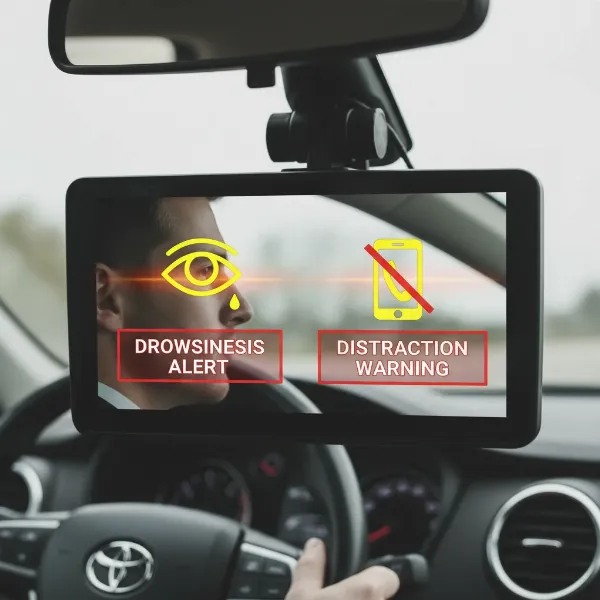 Dash cam screen displaying driver monitoring alerts for drowsiness and distraction.
Intelligent Parking Modes
Traditional parking modes often rely solely on G-sensors to detect impacts. Smart dash cams elevate this by using AI to enable intelligent parking modes, often incorporating radar technology. These systems can detect subtle movements or approaching vehicles even before an impact, triggering recording to capture potential incidents like parking lot ding-and-runs. Some advanced models can differentiate between a person and an animal, reducing false alarms and ensuring critical events are captured with precision.
Voice Control & Real-time Alerts
Convenience meets safety with voice control features. Drivers can issue commands, such as “take photo” or “record video,” without diverting their hands from the steering wheel or eyes from the road. Coupled with real-time audio and visual alerts, AI-driven systems provide instant feedback, notifying drivers of potential hazards or changes in traffic conditions, enhancing their ability to react promptly.
Cloud Connectivity & Remote Monitoring
Many smart dash cams now offer integrated Wi-Fi and 4G connectivity, transforming them into remote surveillance devices. This allows drivers to monitor their vehicle from anywhere, receiving notifications and viewing live footage on their smartphone. In the event of an impact or suspicious activity while parked, the dash cam can instantly upload footage to the cloud, providing secure, accessible evidence and an added layer of peace of mind.
Understanding Advanced Driver Assistance Systems (ADAS): Your Co-Pilot on the Road
ADAS features in dash cams are designed to mimic or augment the safety systems found in high-end vehicles. They actively monitor the road environment and provide timely warnings to help drivers avoid collisions and maintain safe driving practices.
Forward Collision Warning (FCW)
FCW systems continuously monitor the speed and distance of the vehicle ahead. If the dash cam detects that you are approaching another vehicle too quickly and a collision risk is imminent, it will issue an audible and visual alert, giving you precious seconds to react and apply the brakes.
Lane Departure Warning (LDW)
LDW uses the dash cam’s camera to monitor lane markings. If the vehicle begins to drift out of its lane without the turn signal being activated, the system will alert the driver. This feature is particularly useful on long journeys where fatigue might lead to unintentional lane deviations.
Front Vehicle Start Alert
Often overlooked but incredibly useful in stop-and-go traffic, the front vehicle start alert notifies you when the vehicle directly in front of you has started moving. This helps prevent delays at traffic lights and keeps the flow of traffic smooth, especially when a driver’s attention might momentarily wander.
Pedestrian & Cyclist Warning
Leveraging AI’s object recognition capabilities, some ADAS systems can identify pedestrians and cyclists in the vehicle’s path. These warnings are crucial in urban environments or low-visibility conditions, helping to prevent accidents involving vulnerable road users.
Blind Spot Detection (BSD)
While often found as a factory-installed car feature, some advanced dash cam systems integrate blind spot detection. This alerts the driver to vehicles in their blind spots, typically with a visual indicator, before a lane change or turn, thereby reducing the risk of side-swipe collisions.
Driver Fatigue & Distraction Alerts
These ADAS features work in conjunction with DMS, using camera analysis to identify signs of driver fatigue (e.g., blinking patterns) or distraction (e.g., looking away from the road for too long). By issuing alerts, these systems encourage drivers to take breaks or refocus, directly addressing common causes of accidents.
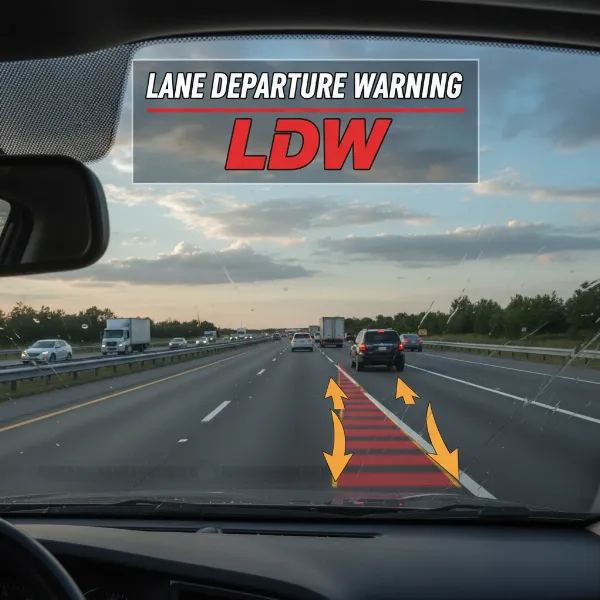 Dash cam view showing lane departure warning with road markings and vehicle in lane.
The Unmistakable Benefits: How AI and ADAS Elevate Driving Safety
Integrating AI and ADAS into dash cams brings a host of significant advantages that extend far beyond simple incident recording, fundamentally transforming the driving experience.
Proactive Accident Prevention
The most compelling benefit of smart dash cams is their ability to actively contribute to accident prevention. By providing real-time warnings for potential collisions, lane departures, and driver fatigue, these systems empower drivers to react sooner and more safely. This proactive approach helps avoid dangerous situations before they escalate, making roads safer for everyone.
Enhanced Driver Awareness
Smart dash cams act as a diligent co-pilot, constantly scanning the environment and monitoring the driver. This continuous feedback loop fosters greater driver awareness, keeping attention focused on the road and reducing instances of distracted or drowsy driving. The alerts serve as gentle reminders, encouraging better driving habits over time.
Valuable Evidence & Insurance Benefits
While prevention is key, accidents can still happen. In such cases, the high-resolution footage captured by a smart dash cam provides irrefutable video evidence. This can be crucial for insurance claims, quickly establishing fault and potentially reducing premiums or expediting settlements. The clear, detailed recordings ensure that your side of the story is accurately represented.
Cost-Effectiveness vs. Built-in Car Systems
For many vehicles, especially older models, adding factory-installed ADAS features can be prohibitively expensive or impossible. Smart dash cams offer a significantly more affordable and accessible way to equip your vehicle with advanced safety functionalities, democratizing access to cutting-edge driver assistance technology without the need for a new car.
“The evolution of dash cams from simple recorders to intelligent, AI-powered safety systems marks a pivotal shift in automotive safety. They are no longer just about evidence; they’re about prevention, making every drive a safer journey.” – Admin, Dashcamon.com, Dash Cam Expert
Choosing Your Smart Dash Cam: What to Look For
Selecting the right smart dash cam involves evaluating several key factors to ensure it meets your specific needs and offers reliable performance.
- Image Quality (Resolution, Night Vision): For AI and ADAS features to function effectively, clear imaging is paramount. Look for models offering 1080p, 2K, or even 4K resolution. Superior night vision capabilities, often powered by advanced sensors like Sony STARVIS, are also crucial for performance in low-light conditions, where some ADAS features might struggle.
- Reliability of AI/ADAS Features: Research reviews to understand the real-world performance of a dash cam’s AI and ADAS. Some systems may be more reliable than others, particularly in varying light or weather conditions. The goal is consistent, accurate alerts, not false positives or missed warnings.
- Connectivity (GPS, Wi-Fi, 4G): Integrated GPS is essential for accurately logging speed and location data, which can be vital evidence. Wi-Fi allows for easy footage transfer and configuration via a smartphone app, while 4G connectivity enables remote monitoring and cloud uploads for enhanced security.
- Power Management (Supercapacitors, Parking Mode Voltage Cutoffs): Dash cams operating in parking mode need a reliable power source without draining your car’s battery. Look for supercapacitors for extreme temperature durability and low-voltage cutoff functions that protect your vehicle’s battery.
- Ease of Installation & Use: A smart dash cam should be straightforward to install and operate. User-friendly interfaces, intuitive app controls, and clear voice prompts contribute to a seamless experience.
- Brand Reputation & Support: Opt for reputable brands known for their reliability, consistent software updates, and responsive customer support. This ensures you’re investing in a durable product with ongoing enhancement and assistance.
Installation and Maintenance Tips for Optimal Performance
Proper installation and regular maintenance are crucial for ensuring your smart dash cam’s AI and ADAS features perform at their best. Mount the dash cam securely in a location that doesn’t obstruct your view but allows for a clear, unobstructed perspective of the road. Ensure the camera lens is clean and free of smudges or dirt, as this can impair the accuracy of ADAS detection. Regularly check for firmware updates, as manufacturers often release improvements to AI algorithms and feature reliability. Additionally, ensure your memory card is healthy and formatted periodically to prevent data corruption.
Common Questions About Smart Dash Cams and ADAS
As smart dash cams become more prevalent, users often have specific questions regarding their functionality and practical implications. Understanding these can help you make an informed decision.
Do ADAS dash cams really prevent accidents?
Yes, ADAS dash cams significantly contribute to accident prevention by providing timely warnings for potential hazards like forward collisions or lane departures. These alerts give drivers crucial extra time to react, thus reducing the likelihood of incidents and enhancing overall road safety.
Is 4K resolution necessary for effective ADAS?
While not strictly “necessary” for all ADAS features, higher resolutions like 4K can significantly improve the accuracy and effectiveness of ADAS. Better resolution means the camera can detect and interpret objects, lane markings, and traffic signs with greater precision, especially in varied lighting conditions.
Can ADAS features work without a Wi-Fi connection?
Most core ADAS features, such as Forward Collision Warning and Lane Departure Warning, operate locally using the dash cam’s internal processing and do not require a Wi-Fi or internet connection to function. Cloud-based features or remote monitoring, however, would necessitate connectivity.
Do smart dash cams drain my car battery?
Modern smart dash cams, especially those with advanced parking modes, often include low-voltage cut-off functions to prevent excessive battery drain. They can also utilize supercapacitors for power stability. However, continuous use of energy-intensive features in parking mode can still impact battery health over long periods if not properly managed.
Are ADAS dash cams legal everywhere?
ADAS dash cams are generally legal in most regions, including the USA. However, it’s essential to check local regulations regarding windshield obstructions, as mounting locations might be restricted. Always ensure the dash cam is positioned in a way that does not impede the driver’s field of view.
What is the difference between AI and ADAS in a dash cam?
AI refers to the artificial intelligence algorithms that enable the dash cam to “think” and interpret data, such as recognizing objects or driver behavior. ADAS (Advanced Driver Assistance Systems) are specific safety features (like FCW or LDW) that ləverage AI to provide warnings and assistance based on that interpreted data. AI is the underlying technology, while ADAS is a set of applications built upon it.
Conclusion
The evolution of dash cams into intelligent devices equipped with AI features and Advanced Driver Assistance Systems marks a significant leap in automotive safety and driver empowerment. From proactive collision warnings and driver monitoring to smart parking modes and remote surveillance, these systems offer a comprehensive layer of protection that was once unimaginable. By understanding the capabilities and benefits of smart dash cams, drivers can make informed choices to enhance their safety, reduce risks, and gain peace of mind on every journey. Isn’t it time your Dash Cam did more than just record?