Imagine a sudden incident on the road—a fender bender, an unexpected swerve, or even a hit-and-run in a parking lot. In such moments, reliable video evidence is invaluable, transforming confusion into clarity and protecting your interests. This crucial need has made dash cams an essential accessory for modern drivers. But if you already own a high-quality action camera like a GoPro, you might wonder: can it pull double duty as your car’s watchful eye, saving you from an additional purchase?
This comprehensive guide delves into the fundamental differences between dedicated dash cams and versatile action cameras, exploring their unique strengths and weaknesses when it comes to vehicle recording. We’ll examine whether repurposing your GoPro is a viable, long-term solution or if a purpose-built dash cam remains the superior choice for ensuring safety and security on every journey.
Understanding Dash Cams: Your Roadside Guardian
A dash cam, or dashboard camera, is specifically engineered for continuous, automatic video recording within a vehicle. Its primary purpose extends beyond simply capturing footage; it serves as an impartial witness, providing crucial evidence in the event of accidents, disputes, or even vandalism. These devices are designed to operate passively in the background, offering peace of mind without constant manual intervention.
Dedicated dash cams come equipped with a suite of features tailored for the demanding automotive environment. They typically offer automatic recording, starting as soon as your car’s ignition turns on, and employ loop recording to continuously overwrite the oldest files when the memory card is full. Critical moments are safeguarded by a G-sensor, which automatically detects impacts or sudden braking and locks the relevant footage, preventing it from being overwritten. Many also boast a parking mode, utilizing motion or impact detection to record incidents while your vehicle is parked and unattended. Additional capabilities often include GPS logging for speed and location data, and superior temperature resilience, allowing them to function reliably in extreme heat or cold.
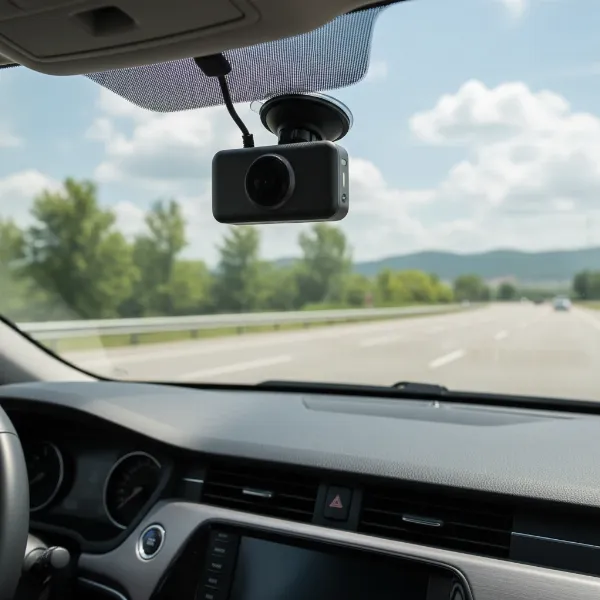 Dedicated dash cam mounted discreetly on a car's windshield with road view.
Exploring Action Cameras: Beyond the Adventure Trail
Action cameras, epitomized by the popular GoPro series, are built for a completely different mission: capturing dynamic, high-energy footage of adventures and sports. Their design prioritizes portability, ruggedness against physical impact, and exceptional image quality in active scenarios like surfing, mountain biking, or skydiving. These cameras are renowned for their ability to deliver crisp, immersive video from unique perspectives.
Key features of action cameras include high-resolution video recording (often 4K, 5.3K, or higher), impressive frame rates for slow-motion effects, and advanced image stabilization technologies like GoPro’s HyperSmooth, which smooths out shaky footage. They are designed for user-managed recording, where the operator actively starts and stops filming to capture specific moments or events. While their compact size and robust construction make them versatile for various activities, their core engineering is geared towards short, deliberate bursts of recording rather than continuous, autonomous surveillance.
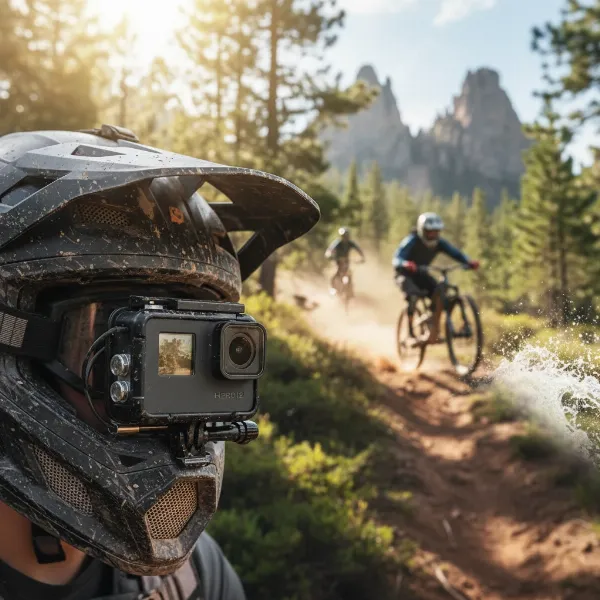 GoPro camera mounted on a helmet, capturing outdoor adventure footage.
The Core Differences: Dash Cam vs. Action Cam Showdown
While both dash cams and action cameras capture video, their distinct design philosophies lead to significant differences in functionality and suitability for in-car security. Understanding these disparities is crucial for making an informed decision about which device best meets your needs.
| Feature | Dedicated Dash Cam | Action Camera (e.g., GoPro) |
|---|---|---|
| Primary Purpose | Continuous, automatic vehicle surveillance | Manual, short-term, high-quality action recording |
| Automation | Auto-on/off with ignition, loop recording, G-sensor event lock | Manual start/stop (some newer models have looping, no auto-protection) |
| Power Management | Designed for constant power (hardwired or 12V), minimal battery reliance during operation | Battery-powered (1-2 hours typically), needs external power for long drives, risks overheating |
| Temperature | Engineered to withstand extreme car temperatures | Sensitive to heat, prone to overheating in hot vehicles |
| Parking Mode | Yes (motion/impact detection when parked, often requires hardwiring) | Generally no dedicated parking mode or continuous surveillance |
| GPS Logging | Common for speed/location data (integrated) | Often available, but not integrated with car-specific event logging |
| Night Vision | Optimized sensors (e.g., Sony STARVIS) for low-light clarity | Good general low-light, but not specialized for license plate capture at night |
| Cost | Wide range ($30 for basic to $400+ for premium) | Higher entry price ($200+), often more expensive |
| Concealment | Often discreet, designed to blend in | More conspicuous, higher theft risk |
| Durability | Built for continuous car vibrations and heat | Rugged for drops/impacts (but not continuous high heat) |
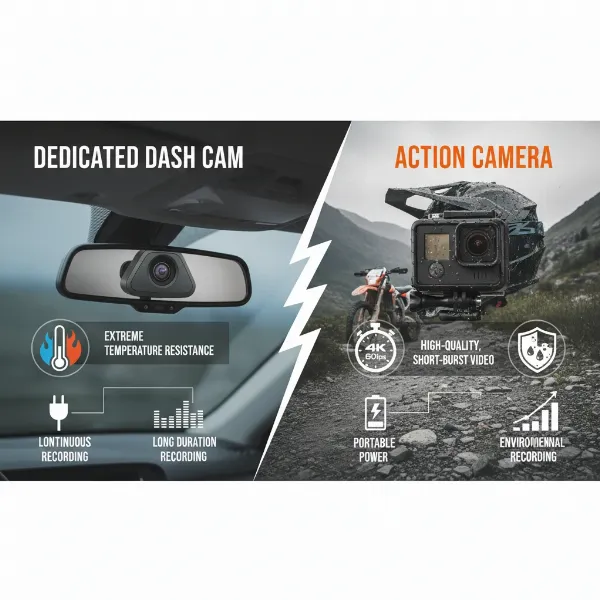 Visual comparison highlighting differences between a dash cam and an action camera.
Can a GoPro Really Serve as Your Dash Cam? The Practical Verdict
Technically, yes, you can use a GoPro to record video while driving, especially if you manually enable its looping record mode and connect it to a continuous power source. Many users, particularly those with a GoPro Hero 8 Black or newer, can configure custom presets for looping video, allowing the camera to overwrite older footage once the memory card is full. Additionally, powering it directly via a USB cable from your car’s port can mitigate its limited battery life.
However, despite these workarounds, using a GoPro as a dedicated dash cam is generally not recommended for reliable, long-term vehicle security. The fundamental design mismatch means you’ll consistently encounter significant limitations that a purpose-built dash cam effortlessly overcomes. It’s a bit like using a sports car for off-roading—while it might technically be possible, it’s ill-suited for the task and likely to underperform or fail when you need it most.
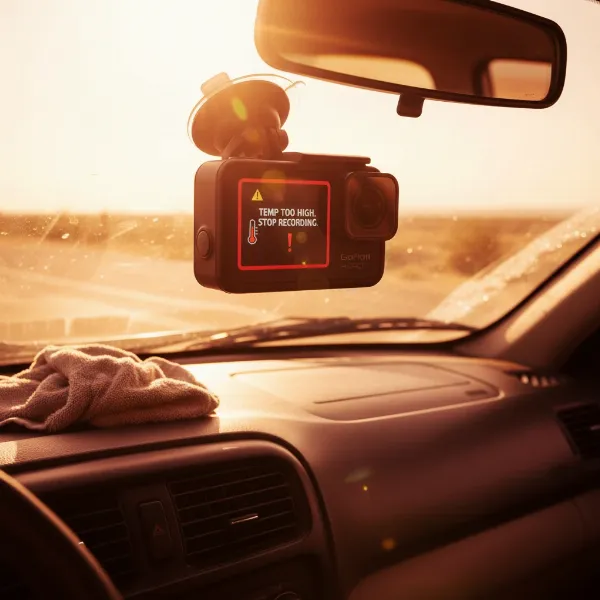 GoPro camera displaying an overheating warning inside a hot car.
Pros of Using a GoPro as a Dash Cam (Limited)
While a GoPro isn’t ideal for daily dash cam duty, it does offer a few advantages if you’re considering it for occasional use or have no other option:
- Exceptional Daytime Video Quality: GoPros are renowned for their high-resolution video, often capturing stunning 4K or 5.3K footage with vibrant colors and sharp detail during the day. This can be superior to many entry-level dash cams.
- Wide Field of View: Action cameras typically offer a very wide-angle lens, capturing a broad perspective of the road ahead. This can be beneficial for seeing more of the scene.
- Portability and Versatility: If you frequently switch vehicles or only need a dash cam for specific trips, a GoPro can be easily moved and mounted with a suction cup, unlike hardwired dash cams. Its voice control can also simplify starting and stopping recording.
- Existing Investment: If you already own a GoPro, repurposing it might seem like a cost-effective solution initially, avoiding the immediate expense of a new device.
Cons of Using a GoPro as a Dash Cam (Significant)
The disadvantages of using a GoPro as a dash cam far outweigh its limited benefits for consistent vehicle security:
- Lack of Automatic Recording: Unlike dash cams that power on and begin recording with your car, a GoPro requires manual activation. Forgetting to press record means crucial incidents could be missed, making it unreliable for accident evidence.
- Limited Battery Life & Overheating: GoPros are designed for short bursts of action, not hours of continuous recording. Their batteries typically last only 1-2 hours. While you can power them via USB, continuous charging in a hot car can lead to significant overheating, causing the camera to shut down or even damaging the internal battery. Dedicated dash cams are built to manage extreme cabin temperatures.
- No Dedicated Parking Mode: One of a dash cam’s most vital features is parking mode, which monitors your vehicle for impacts or motion when parked and off. GoPros lack this specialized function, leaving your car vulnerable to hit-and-runs or vandalism when unattended.
- Inferior Night Vision: While GoPros perform well in good light, they generally lack the specialized low-light sensors (like Sony STARVIS) found in many dash cams. This can result in grainy, less detailed footage at night, making it difficult to discern license plates or crucial details.
- Theft Risk: GoPros are expensive and highly recognizable. Leaving one prominently mounted in your car makes your vehicle an attractive target for thieves, increasing the risk of break-ins. Dash cams are often designed to be discreet and less conspicuous.
- Cost vs. Functionality: While a GoPro offers incredible versatility for action, its higher price point compared to many dedicated dash cams means you’re paying for features you won’t use in a car, while lacking essential dash cam functionalities.
- File Management & Protection: While newer GoPros have looping, they typically lack the G-sensor’s automatic file locking capability of dash cams. This means critical footage might be accidentally overwritten or harder to locate without manual intervention.
Why Dedicated Dash Cams Offer Superior Car Security
When it comes to robust and reliable vehicle security, dedicated dash cams are unequivocally the superior choice. They are purpose-built systems engineered to safeguard your journey and your parked vehicle with specialized features that an action camera simply cannot replicate.
“For genuine peace of mind on the road, a device must be purpose-built for the environment it operates in,” says an expert in vehicle technology. “Dash cams are designed from the ground up to be reliable witnesses, capturing critical events automatically and consistently, regardless of whether you remember to press a button.”
Beyond continuous, automatic recording and loop functionality, modern dash cams provide essential safety nets:
- G-Sensor Protection: This accelerometer detects sudden impacts or rapid braking, automatically saving and locking the critical footage before and after the event, ensuring it cannot be overwritten.
- Parking Surveillance: With hardwiring, a dash cam can monitor your vehicle 24/7, recording motion or impacts even when the engine is off, invaluable for capturing hit-and-runs or vandalism.
- Temperature Durability: Designed to operate consistently in extreme cabin temperatures, from scorching summers to freezing winters, without overheating or failing.
- Enhanced Night Vision: Equipped with specialized image sensors (such as Sony STARVIS), dash cams excel at capturing clear, detailed footage in low-light conditions, making license plates and crucial details visible at night.
- GPS Logging: Accurately records your vehicle’s speed and location, providing critical context and verifiable data for insurance claims or legal proceedings.
- Advanced Driver-Assistance Systems (ADAS): Many premium dash cams include features like lane departure warnings, forward collision alerts, and front vehicle start alerts, enhancing driver safety.
- Discreet Design: Often compact and designed to be inconspicuous, reducing the risk of theft compared to a visible, valuable action camera.
These integrated, automated, and specialized features make dedicated dash cams an indispensable tool for protecting yourself, your vehicle, and your insurance claims.
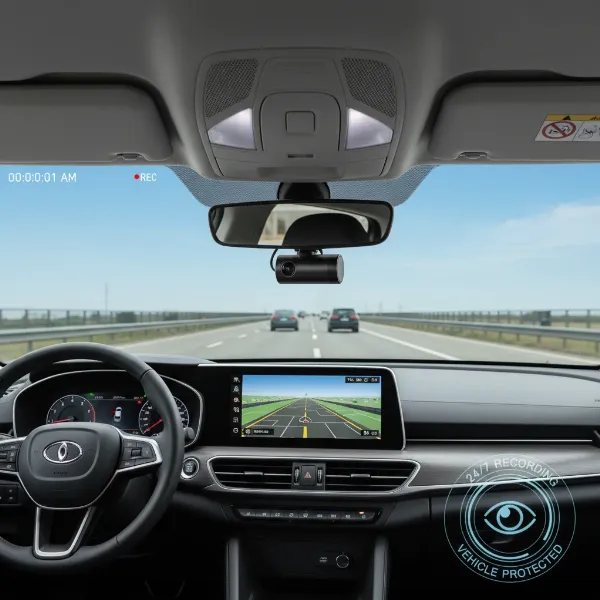 Secure car interior with a discreet dash cam, emphasizing vehicle protection.
Conclusion: Drive Smart, Drive Protected
While the allure of using a versatile GoPro as a dash cam might be strong, especially if you already own one, it’s clear that a dedicated dash cam is the unequivocal champion for vehicle security. GoPros excel at capturing thrilling adventures, but they simply aren’t engineered for the continuous, automated, and temperature-resistant demands of in-car surveillance. Their manual operation, limited battery life, lack of specific parking modes, and vulnerability to heat make them a compromise that could leave you unprotected when you need evidence most.
For reliable, set-it-and-forget-it protection, invest in a dash cam designed specifically for your vehicle. It’s the smart choice for peace of mind, ensuring every critical moment on the road or in the parking lot is captured automatically and securely. Are you willing to gamble with your safety and potential legal recourse by settling for less than purpose-built protection?
Frequently Asked Questions
Is GoPro better than a dash cam for video quality?
|
Our Picks for the Best Dash Cam in 2026
As an Amazon Associate I earn from qualifying purchases.
|
||
| Num | Product | Action |
|---|---|---|
| 1 | 4K+4K Dash Cam Front and Rear, Free 128GB Card Included, 5.8GHz WiFi Dash Camera for Cars, Built-in GPS, G-Sensor, 170°Wide Angle, 3" IPS Screen, 24H Parking Mode, Support 512GB Max |

|
| 2 | Garmin Dash Cam™ Mini 3, Ultracompact 1080p HD Dash Cam with a 140-degree Field of View, Built in Clarity™ Polarizer, Voice Controlled, Automatic Recording |
|
| 3 | Dash Cam Front and Rear, 2.5K Dual Dash Camera for Cars, 2560P Mini Car Camera, 2 inch IPS Screen, 32GB Card Included, WDR Night Vision, 24 Hours Parking Monitor, G-Sensor, Support 256 GB Max |
|
| 4 | Dual 4K Dash Cam Front and Rear - Free 64G SD Card, 2160P+2160P UHD Dash Camera for Cars, Dashcam with 176°+160° Wide Angle, 3.5'' IPS Screen Dashcam, G-Sensor, WDR, Night Vision, 24H Parking Monitor |
|
| 5 | WOLFBOX G840S 12" 4K Mirror Dash Cam Backup Camera, 5.8GHz WiFi Smart Rearview Mirror for Cars & Trucks, Front and Rear View Dual Cameras, Night Vision, Parking Assistance, Included 32GB Card & GPS |
|
| 6 | VIOFO A229 Plus Dash Cam Front and Rear, Dual STARVIS 2 Sensors, 2 Channel HDR, 1440P+1440P Voice Control Car Dash Camera, 5GHz Wi-Fi, Voice Control, Ultra-Precise GPS |
|
| 7 | REDTIGER 4K Dash Cam Front Rear, STARVIS 2 Sensor, Free Card Included, 5.8GHz WiFi-20MB/s Fast Download, Dash Camera for Cars with GPS, WDR Night Vision, 170°Wide Angle, 24H Parking Mode(F7NP) |
|
| 8 | 4K Dash Cam Front, Built-in 5G WiFi, 64GB Card Included, Dash Camera for Cars, Mini Dashcam with Super Night Vision, Loop Recording, G-Sensor, 24 Hours Parking Monitor, Support 256GB Max |
|
| 9 | Dash Cam Front and Rear, 1080P Dash Camera for Cars, 3 Channel Car Camera Front Rear and Inside with 32GB Card, Loop Recording, Night Vision, HDR, 24Hr Parking, G-Sensor |
|
| 10 | ROVE R2-4K DUAL Dash Cam Front and Rear, STARVIS 2 Sensor, FREE 128GB Card Included, 5G WiFi - up to 20MB/s Fastest Download Speed with App, 4K 2160P/FHD Dash Camera for Cars, 3" IPS, 24H Parking Mode |
|
In ideal daylight conditions, a GoPro often offers superior video resolution and image clarity due to its focus on high-quality action capture. However, dedicated dash cams typically feature specialized low-light sensors for better performance at night, which is crucial for identifying details like license plates.
Do GoPros have parking mode functionality?
No, GoPros do not have a dedicated “parking mode” like most dash cams. Dash cam parking modes use motion or impact detection to record incidents when your car is off, often requiring hardwiring for continuous power. A GoPro would need to be manually turned on and continuously powered to record while parked, which is impractical and risks overheating.
What are the main risks of using a GoPro as a dash cam?
The primary risks include missing critical footage due to manual activation, overheating and battery drain during long drives, poor night vision compared to specialized dash cams, lack of automatic incident protection (G-sensor), and increased theft risk due to its high value and conspicuous design.
How long can a GoPro record continuously when used as a dash cam?
A GoPro’s internal battery typically lasts 1 to 2 hours of continuous recording. For longer durations, it must be continuously powered via a USB connection. However, sustained recording while charging, especially in a warm car, significantly increases the risk of overheating and automatic shutdown.
Can I save specific footage on a GoPro from being overwritten, like with a dash cam?
While newer GoPros offer loop recording, they generally lack the instant “event lock” feature of a dash cam’s G-sensor. On a Dash Cam, detected impacts automatically protect relevant video segments from being overwritten. On a GoPro, you would need to manually stop recording or use a highlight tag, which might not be practical during a sudden incident.