For truckers and fleet managers, the road presents a unique set of challenges and responsibilities. From navigating complex routes to ensuring the safety of cargo and personnel, every decision counts. In an industry where liability, insurance costs, and driver performance are paramount, a reliable dash cam is no longer a luxury but an indispensable tool. These advanced devices offer a vigilant eye on every journey, providing irrefutable evidence, fostering safer driving habits, and ultimately protecting your business from unforeseen circumstances. This comprehensive guide will explore the various types of dash cams, essential features, top recommendations, and crucial buying considerations to help you select the perfect system for your commercial trucks and fleet vehicles.
Why Dash Cams Are Crucial for Commercial Trucking and Fleets
The stakes in commercial trucking are exceptionally high. Accidents, even minor ones, can lead to significant financial repercussions, legal battles, and damage to a company’s reputation. This is where dash cams become invaluable assets, offering multiple layers of protection and operational benefits.
Firstly, dash cams serve as critical protection against liability and fraudulent claims. In the event of an accident, clear video footage can provide irrefutable evidence of what transpired, often exonerating your drivers from false accusations. Statistics show that a significant percentage of collisions involving commercial vehicles are not the fault of the truck driver, yet without video proof, proving innocence can be an uphill battle. This evidence can prevent costly legal disputes and protect your company from what are known as “nuclear verdicts”—exceptionally large jury awards in trucking litigation cases.
Secondly, implementing dash cam systems can lead to a notable reduction in insurance costs. Insurance providers increasingly recognize the proactive safety measures that dash cams offer. By demonstrating a commitment to safety and having verifiable incident data, fleets can often negotiate lower premiums. Dash cam footage also expedites insurance claims, allowing for quicker resolution and minimizing operational downtime.
Beyond protection, dash cams are powerful tools for improving driver safety and behavior through monitoring and coaching. Modern fleet dash cams often include advanced features like Artificial Intelligence (AI) and Driver Monitoring Systems (DMS) that detect risky behaviors such as distracted driving, drowsy driving, harsh braking, and speeding. Real-time alerts can immediately notify drivers, while recorded data provides fleet managers with actionable insights for personalized coaching sessions. This proactive approach helps correct unsafe habits before they lead to incidents, fostering a culture of continuous improvement rather than constant surveillance.
Finally, dash cams ensure compliance and robust incident documentation. They provide a comprehensive record of events, which is essential for regulatory compliance and internal investigations. From documenting proof of delivery to monitoring adherence to company policies, the continuous recording capabilities of dash cams offer unparalleled transparency and accountability across your fleet operations.
Types of Dash Cams for Commercial Vehicles
Choosing the right dash cam for your fleet begins with understanding the different types available and how they cater to specific needs. Commercial vehicles, especially trucks, require more robust and comprehensive solutions than standard passenger car dash cams.
Forward-Facing (Single Channel) Dash Cams: These are the most basic type, recording only the road ahead through a single lens. While they offer fundamental accident documentation, their utility for commercial fleets is often limited. They don’t provide insight into driver behavior or events occurring inside or around the sides of the vehicle. For a full-fledged fleet management system, a single-channel camera typically won’t suffice.
Dual-Facing (Front & Interior) Dash Cams: This configuration is widely considered the standard for commercial fleet vehicles. A dual-facing dash cam incorporates two cameras: one capturing the road ahead and another monitoring the interior of the cab. The interior camera is crucial for observing driver behavior, detecting distractions, drowsiness, or cell phone use. This dual perspective is invaluable for accident reconstruction, driver coaching, and protecting drivers from wrongful accusations, particularly in disputes where driver actions might be questioned. Many dual-facing systems also integrate infrared (IR) sensors for clear in-cab recording, even in complete darkness.
Multi-Channel (360-degree & Side Cams) Systems: For the most comprehensive coverage, multi-channel systems go beyond dual-facing setups. These advanced solutions can include additional cameras mounted on the sides, rear, or even underneath the vehicle. This provides a 360-degree view, effectively eliminating blind spots around large commercial trucks, which are notorious hazard zones. Such systems are particularly beneficial for large fleets or vehicles that operate in complex environments, offering maximum visibility for parking, maneuvering, and overall situational awareness. They are often integrated into a centralized Digital Video Recording (DVR) system within the vehicle.
AI-Powered Dash Cams: Representing the cutting edge of dash cam technology, AI-powered dash cams transcend simple recording devices. These systems use artificial intelligence and machine learning to analyze video footage in real-time. They can identify and alert drivers to potential hazards, detect unsafe driving behaviors (like tailgating, lane departure, or harsh cornering), and even recognize signs of driver fatigue or distraction. The AI integrates seamlessly with fleet management systems, transforming raw video into actionable data for predictive safety measures and highly targeted driver coaching. These intelligent systems actively work to prevent accidents before they happen, making them an indispensable investment for modern fleets prioritizing safety and efficiency.
Essential Criteria for Choosing a Dash Cam for Your Fleet
Selecting the best dash cam for your commercial fleet requires careful consideration of several key features. Not all dash cams are created equal, and what works for a personal vehicle often falls short for the rigorous demands of professional trucking.
Video Quality
|
Our Picks for the Best Dash Cam in 2026
As an Amazon Associate I earn from qualifying purchases.
|
||
| Num | Product | Action |
|---|---|---|
| 1 | ROVE R2-4K DUAL Dash Cam Front and Rear, STARVIS 2 Sensor, FREE 128GB Card Included, 5G WiFi - up to 20MB/s Fastest Download Speed with App, 4K 2160P/FHD Dash Camera for Cars, 3" IPS, 24H Parking Mode |

|
| 2 | VIOFO A229 Plus Dash Cam Front and Rear, Dual STARVIS 2 Sensors, 2 Channel HDR, 1440P+1440P Voice Control Car Dash Camera, 5GHz Wi-Fi, Voice Control, Ultra-Precise GPS |
|
| 3 | Garmin Dash Cam™ Mini 3, Ultracompact 1080p HD Dash Cam with a 140-degree Field of View, Built in Clarity™ Polarizer, Voice Controlled, Automatic Recording |
|
| 4 | Dash Cam Front and Rear, 2.5K Dual Dash Camera for Cars, 2560P Mini Car Camera, 2 inch IPS Screen, 32GB Card Included, WDR Night Vision, 24 Hours Parking Monitor, G-Sensor, Support 256 GB Max |
|
| 5 | Dual 4K Dash Cam Front and Rear - Free 64G SD Card, 2160P+2160P UHD Dash Camera for Cars, Dashcam with 176°+160° Wide Angle, 3.5'' IPS Screen Dashcam, G-Sensor, WDR, Night Vision, 24H Parking Monitor |
|
| 6 | 4K Dash Cam Front, Built-in 5G WiFi, 64GB Card Included, Dash Camera for Cars, Mini Dashcam with Super Night Vision, Loop Recording, G-Sensor, 24 Hours Parking Monitor, Support 256GB Max |
|
| 7 | REDTIGER 4K Dash Cam Front Rear, STARVIS 2 Sensor, Free Card Included, 5.8GHz WiFi-20MB/s Fast Download, Dash Camera for Cars with GPS, WDR Night Vision, 170°Wide Angle, 24H Parking Mode(F7NP) |
|
| 8 | 4K+4K Dash Cam Front and Rear, Free 128GB Card Included, 5.8GHz WiFi Dash Camera for Cars, Built-in GPS, G-Sensor, 170°Wide Angle, 3" IPS Screen, 24H Parking Mode, Support 512GB Max |
|
| 9 | WOLFBOX G840S 12" 4K Mirror Dash Cam Backup Camera, 5.8GHz WiFi Smart Rearview Mirror for Cars & Trucks, Front and Rear View Dual Cameras, Night Vision, Parking Assistance, Included 32GB Card & GPS |
|
| 10 | Dash Cam Front and Rear, 1080P Dash Camera for Cars, 3 Channel Car Camera Front Rear and Inside with 32GB Card, Loop Recording, Night Vision, HDR, 24Hr Parking, G-Sensor |
|
High-definition video quality is non-negotiable. If footage is grainy or unclear, it loses its value as evidence. Look for dash cams that offer at least 1080p Full HD resolution, though 2K or 4K provides superior detail, making it easier to discern license plates, road signs, and critical details in an incident. A wide-angle lens (typically 140° to 170°) is also vital to capture a broader view of the road and surrounding areas. High frame rates (30-60 frames per second) ensure smooth video, essential for fast-moving vehicles.
Night Vision & Low-Light Performance
Commercial vehicles operate day and night, in all weather conditions. Excellent low-light performance and true night vision capabilities are crucial. Many top-tier dash cams utilize Sony STARVIS sensors, known for their exceptional clarity in dim light. For in-cab cameras, infrared (IR) LEDs are a must, providing clear video of the driver even in pitch darkness without emitting visible light that could be distracting.
Durability & Reliability
Commercial truck environments are harsh, with constant vibrations, temperature extremes, and potential for dust or moisture. A fleet dash cam must be built to withstand these conditions. Look for devices with robust housings, high-quality components, and a proven track record of reliability in demanding commercial settings. Consumer-grade dash cams are typically not designed for this level of stress.
Storage & Connectivity
Effective data management is key for fleets.
- Local Storage: Most dash cams record to an SD card, which should be high-endurance, especially for continuous recording. Ensure the camera supports sufficient storage capacity.
- Cloud Connectivity: For fleets, cloud storage is highly recommended. Systems with built-in Wi-Fi or LTE cellular connectivity automatically upload critical video segments to a secure cloud platform. This ensures footage is instantly accessible to fleet managers, protected from tampering or loss, and eliminates the need for manual SD card retrieval.
- On-Demand Video: The ability to request and download video footage remotely is a significant advantage for incident investigation and driver coaching.
Advanced Safety Features
Modern fleet dash cams integrate a suite of features designed to enhance safety and provide crucial context.
- G-Sensor (Event Detection): This accelerometer automatically detects impacts, sudden braking, or harsh acceleration and locks the corresponding video footage, preventing it from being overwritten.
- GPS Tracking: Integrated GPS provides precise location, speed, and route data, which is invaluable for accident reconstruction, verifying driver logs, and optimizing routes.
- Parking Mode: This feature allows the dash cam to continue monitoring the vehicle when parked, typically triggered by motion or impact, protecting against vandalism or hit-and-runs when the truck is unattended.
- ADAS (Advanced Driver-Assistance Systems): Features like Forward Collision Warning (FCW) and Lane Departure Warning (LDW) alert drivers to potential hazards in real-time.
- DMS (Driver Monitoring Systems): Uses AI to detect driver fatigue, distraction (e.g., cell phone use), and provides immediate in-cab alerts.
Integration with Fleet Management Systems (FMS)
The most powerful dash cam solutions for fleets are those that seamlessly integrate with broader telematics and fleet management software. These systems turn dash cams into more than just cameras; they become data hubs that feed into a comprehensive platform. This integration allows fleet managers to view video alongside telematics data (speed, location, engine diagnostics), track driver scores, and conduct targeted coaching, leading to a truly holistic approach to safety and efficiency.
Ease of Installation & Tamper-Proof Design
For large fleets, ease of installation is important, but professional installation is often preferred to ensure optimal camera placement and hardwiring for continuous power. A tamper-proof design ensures that drivers cannot easily disable or alter the camera system, preserving the integrity of the collected data.
Privacy Considerations
When implementing dash cams, especially those with in-cab recording, privacy for drivers is a critical consideration. It’s essential to be transparent with drivers about the purpose of the cameras (safety, liability protection, coaching, not constant surveillance), obtain necessary consents, and establish clear company policies regarding data usage and access. Compliance with local laws regarding recording is also paramount.
Top Dash Cams for Truckers and Fleet Vehicles in 2024
The market for fleet dash cams is evolving rapidly, with new technologies constantly emerging. Based on comprehensive research into features crucial for commercial vehicles, here are some of the leading dash cam solutions and brands trusted by truckers and fleet managers.
Comparison Table: Leading Fleet Dash Cams
| Feature | Samsara CM34 | Verizon Connect AI | BlackVue DR970X-2CH | Motive AI | Garmin Dash Cam 57 |
|---|---|---|---|---|---|
| Resolution | 1080p Full HD (Front & Cab) | 1080p Full HD (Front & Cab) | 4K (Front) / 1080p (Rear) | 1080p Full HD (Front & Cab) | 1440p (Front) |
| Camera Views | Dual-facing (Road & Cab) | Dual-facing (Road & Cab) | Dual-facing (Front & Rear) | Dual-facing (Road & Cab) | Front-facing (multi-unit capable) |
| AI Features | Advanced ADAS & DMS | Advanced ADAS & DMS | Basic (G-Sensor, Motion) | Real-time AI Coaching | Incident Detection, Voice |
| Cloud Connectivity | Yes (Built-in LTE) | Yes (Built-in LTE) | Optional (via Hotspot) | Yes (Built-in LTE) | No (via app/PC) |
| GPS | Yes | Yes | Yes | Yes | Yes |
| Parking Mode | Yes (Hardwired) | Yes (Hardwired) | Yes (Hardwired) | Yes (Hardwired) | Yes (Hardwired) |
| Target User | Enterprise Fleets, Advanced Telematics | Large Fleets, Integrated Telematics | Owner-Operators, Small Fleets | Fleets focused on Proactive Safety | Owner-Operators, Individual Drivers |
Detailed Reviews of Top Choices
Samsara CM34 Dual-Facing AI Dash Cam
The Samsara CM34 stands out as a top-tier solution for enterprise fleets, offering a comprehensive blend of AI capabilities and seamless integration with the Samsara fleet management platform. It captures crisp 1080p footage both from the road and the cabin, enhanced by infrared for night visibility. Its advanced AI detects a wide array of risky behaviors, from distracted driving to close-following, providing real-time audio alerts to drivers. All data is uploaded via built-in LTE to the Samsara cloud, enabling fleet managers to access footage, generate safety reports, and conduct coaching remotely. While an excellent all-around system for safety and efficiency, it typically requires a subscription and is best suited for businesses already invested in or planning to adopt the Samsara ecosystem.
BlackVue DR970X-2CH
For truckers and owner-operators prioritizing superior video quality and robust reliability, the BlackVue DR970X-2CH is an outstanding choice. This dual-channel system typically records in stunning 4K resolution for the front camera and 1080p for the rear, offering exceptional detail. BlackVue dash cams are renowned for their sleek, discreet design and user-friendly interface. While it doesn’t offer the same level of integrated AI coaching as dedicated fleet telematics systems, it provides essential features like built-in GPS, Wi-Fi for easy file transfer, and an advanced parking mode. Cloud connectivity is available through an optional hotspot, making it a flexible option for those who prefer high-quality video evidence with less emphasis on real-time AI-driven coaching, and is widely regarded as one of the best dash cams for quality recording.
Motive AI Dashcam
Motive’s AI Dashcam is designed with proactive safety coaching at its core, making it ideal for fleets focused on driver improvement and accident prevention. It features dual-facing cameras that capture 1080p footage of both the road and the driver. What sets Motive apart is its sophisticated AI, which provides real-time alerts for a broad spectrum of unsafe behaviors, directly coaching drivers in the moment. The system integrates deeply with Motive’s comprehensive fleet management platform, allowing managers to track safety scores, identify trends, and deliver targeted feedback. Like other enterprise solutions, it operates on a subscription model, offering significant ROI through reduced accident rates and improved driver performance.
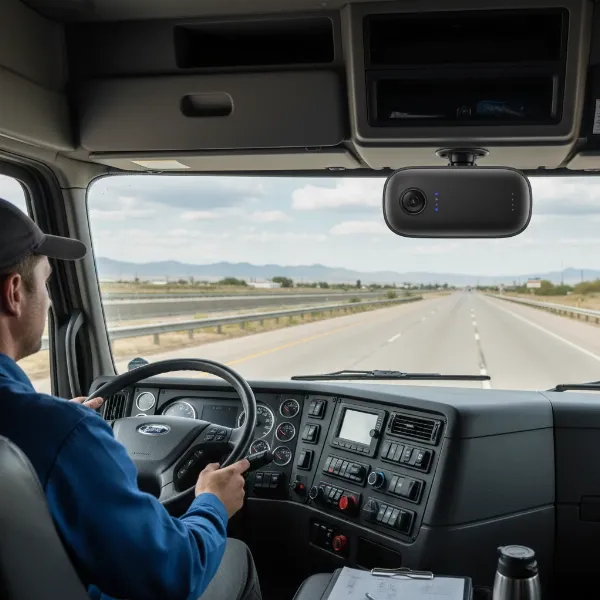 A dual-facing AI dash cam mounted inside a semi-truck cabin, showing both the road ahead and the driver.
Your Buying Guide: What to Consider Before Investing
Making an informed decision on a dash cam system for your fleet involves more than just picking a popular brand. Consider these factors to ensure your investment aligns perfectly with your operational needs and budget.
Budget & Subscription Costs
Dash cam systems for commercial fleets can vary significantly in price. Basic models might have a lower upfront cost, but advanced AI-integrated systems often come with a higher initial investment and recurring subscription fees for cloud storage, LTE connectivity, and advanced software features. Factor in the total cost of ownership, including installation, hardware, and monthly fees, when evaluating options. Remember that the ROI from reduced accidents, lower insurance, and improved efficiency often outweighs these costs.
Fleet Size & Specific Needs
The size of your fleet and your operational specificities will heavily influence your choice.
- Owner-Operators: Might prefer simpler, high-quality dual-channel cameras like the BlackVue or Garmin Dash Cam 57, potentially without a heavy reliance on a full FMS.
- Small to Mid-size Fleets: Could benefit from integrated solutions like Motive or SmartWitness, which offer strong coaching and management features.
- Large Enterprise Fleets: Will typically require comprehensive, scalable solutions such as Samsara or Verizon Connect, which integrate seamlessly with existing telematics platforms and offer extensive reporting and management tools.
Consider whether you need just accident recording or a full suite of safety and efficiency tools.
Installation
Proper installation is crucial for the reliability and effectiveness of a fleet dash cam.
- DIY vs. Professional: While some simpler units can be self-installed, complex multi-channel or hardwired systems are best handled by professionals. Professional installation ensures optimal camera placement, secure wiring (often directly to the vehicle’s power source for parking mode), and proper configuration.
- Tamper-Proofing: Ensure the system is installed in a way that prevents unauthorized access or tampering by drivers.
Data Management & Accessibility
Think about how you want to manage and access your video data.
- Cloud vs. Local Storage: Cloud solutions offer remote access, automatic backup, and greater security, but typically involve subscription costs. Local SD card storage is cheaper but requires manual management and is vulnerable to loss or damage.
- Remote Access: For fleet managers, the ability to access footage and alerts remotely, often via a web portal or mobile app, is a major advantage for real-time incident response and coaching.
Legal & Privacy Compliance
Research and adhere to all local, state, and federal regulations regarding dash cam usage in commercial vehicles, especially concerning audio recording and in-cab cameras. Always be transparent with your drivers about the presence and purpose of dash cams, and establish clear policies to protect their privacy while achieving your safety goals. Obtaining written consent from drivers is often a recommended practice.
Scalability for Future Growth
Choose a system that can grow with your fleet. If you anticipate expanding your operations, ensure the dash cam solution you select offers scalability, allowing you to easily add more cameras, vehicles, or advanced features without overhauling your entire system.
Frequently Asked Questions About Trucker and Fleet Dash Cams
Are dash cams legal for truckers to use?
Yes, dash cams are generally legal for truckers to use across most jurisdictions. However, specific regulations regarding mounting locations (to avoid obstructing driver view), audio recording, and driver privacy notification can vary. Always consult local laws and consider obtaining driver consent, especially for in-cab cameras and audio recording.
How do dash cams help reduce insurance premiums for fleets?
Dash cams provide verifiable video evidence that can prove non-fault in accidents, reduce false claims, and demonstrate a fleet’s commitment to safety. This tangible proof of reduced risk and improved driver behavior can lead insurance companies to offer lower premiums. Many insurers are now actively encouraging or even requiring dash cam implementation.
What’s the main difference between a regular dash cam and a fleet dash cam?
Fleet dash cams are typically more robust, designed to withstand commercial vehicle environments, and offer specialized features. Key differences include: multi-channel recording (front, interior, side), built-in LTE for cloud connectivity, advanced AI/ADAS/DMS features for real-time coaching, integration with telematics platforms, and tamper-proof designs. Regular dash cams are usually simpler, forward-facing, and lack the comprehensive management features crucial for commercial operations.
Can dash cams record when the truck is parked?
Yes, most quality fleet dash cams offer a parking mode feature. When hardwired to the vehicle’s power source, they can continue to record when the engine is off. Parking mode is usually triggered by motion detection or impact, capturing incidents like hit-and-runs or vandalism when the vehicle is unattended, providing crucial security.
How important is AI in fleet dash cams?
AI is becoming increasingly important, transforming dash cams from passive recorders into active safety tools. AI-powered Dash Cams can detect risky driving behaviors in real-time (e.g., distracted driving, drowsiness, tailgating), provide instant in-cab alerts, and offer valuable data for proactive driver coaching. This not only helps prevent accidents but also significantly improves overall fleet safety and efficiency, making AI a vital component for modern fleet management.