Choosing the right dash cam can feel like navigating a maze of features, resolutions, and designs. One of the most fundamental decisions you’ll face is whether to opt for a dash cam with a built-in screen or a more discreet, screenless model. This choice significantly impacts user experience, installation, and even your peace of mind on the road. As an Admin of Dashcamon.com with over a decade of hands-on experience, I’m here to guide you through the intricacies of each option, helping you make an informed decision for your vehicle.
Understanding Dash Cams: More Than Just a Camera
Dash cams, or dashboard cameras, have become indispensable tools for modern drivers. They act as silent witnesses, constantly recording your journeys and providing crucial video evidence in the event of an accident, road rage incident, or even vandalism when parked. Beyond accident claims, dash cams can capture breathtaking scenic drives, document poor driving behavior, and even offer features like GPS logging and driver assistance. The primary purpose remains clear: to enhance safety and provide undeniable proof when it matters most.
Dash Cams with Screens: Immediate Feedback and Control
Dash cams equipped with a built-in display offer a straightforward and intuitive user experience. These models typically feature LCD screens, ranging from 1.5 to 3 inches, allowing for immediate interaction and visual confirmation.
Instant Feedback and Control
|
Our Picks for the Best Dash Cam in 2026
As an Amazon Associate I earn from qualifying purchases.
|
||
| Num | Product | Action |
|---|---|---|
| 1 | Dual 4K Dash Cam Front and Rear - Free 64G SD Card, 2160P+2160P UHD Dash Camera for Cars, Dashcam with 176°+160° Wide Angle, 3.5'' IPS Screen Dashcam, G-Sensor, WDR, Night Vision, 24H Parking Monitor |

|
| 2 | Dash Cam Front and Rear, 1080P Dash Camera for Cars, 3 Channel Car Camera Front Rear and Inside with 32GB Card, Loop Recording, Night Vision, HDR, 24Hr Parking, G-Sensor |
|
| 3 | REDTIGER 4K Dash Cam Front Rear, STARVIS 2 Sensor, Free Card Included, 5.8GHz WiFi-20MB/s Fast Download, Dash Camera for Cars with GPS, WDR Night Vision, 170°Wide Angle, 24H Parking Mode(F7NP) |
|
| 4 | Dash Cam Front and Rear, 2.5K Dual Dash Camera for Cars, 2560P Mini Car Camera, 2 inch IPS Screen, 32GB Card Included, WDR Night Vision, 24 Hours Parking Monitor, G-Sensor, Support 256 GB Max |
|
| 5 | VIOFO A229 Plus Dash Cam Front and Rear, Dual STARVIS 2 Sensors, 2 Channel HDR, 1440P+1440P Voice Control Car Dash Camera, 5GHz Wi-Fi, Voice Control, Ultra-Precise GPS |
|
| 6 | 4K+4K Dash Cam Front and Rear, Free 128GB Card Included, 5.8GHz WiFi Dash Camera for Cars, Built-in GPS, G-Sensor, 170°Wide Angle, 3" IPS Screen, 24H Parking Mode, Support 512GB Max |
|
| 7 | 4K Dash Cam Front, Built-in 5G WiFi, 64GB Card Included, Dash Camera for Cars, Mini Dashcam with Super Night Vision, Loop Recording, G-Sensor, 24 Hours Parking Monitor, Support 256GB Max |
|
| 8 | ROVE R2-4K DUAL Dash Cam Front and Rear, STARVIS 2 Sensor, FREE 128GB Card Included, 5G WiFi - up to 20MB/s Fastest Download Speed with App, 4K 2160P/FHD Dash Camera for Cars, 3" IPS, 24H Parking Mode |
|
| 9 | Garmin Dash Cam™ Mini 3, Ultracompact 1080p HD Dash Cam with a 140-degree Field of View, Built in Clarity™ Polarizer, Voice Controlled, Automatic Recording |
|
| 10 | WOLFBOX G840S 12" 4K Mirror Dash Cam Backup Camera, 5.8GHz WiFi Smart Rearview Mirror for Cars & Trucks, Front and Rear View Dual Cameras, Night Vision, Parking Assistance, Included 32GB Card & GPS |
|
The most apparent advantage of a screened dash cam is the ability to view footage in real-time or play back recorded videos directly on the device. This is incredibly useful for instantly reviewing an incident on the spot, potentially resolving disputes with other drivers or law enforcement without needing additional devices. Many screened models also come with physical buttons or touchscreens, making it simple to navigate menus, adjust settings, and fine-tune recording parameters on the fly. This direct control eliminates the need for a separate smartphone or computer for basic operations.
Ease of Setup and Operation
During initial installation, a screen simplifies the alignment process. You can instantly see what your dash cam is recording, ensuring the camera angle is perfectly set to capture the road ahead (and behind, with dual-channel models). This real-time visual feedback can save time and frustration, guaranteeing optimal coverage from the start. Moreover, screens allow you to easily monitor the device’s operational status, confirming it’s recording correctly and making timely adjustments if any issues arise.
Visual Status Monitoring
With a screen, you always have a clear indicator that your dash cam is working. This visual confirmation provides immediate reassurance that your device is actively protecting you. For drivers who prefer a hands-on approach and value instant access to their footage and settings without relying on a smartphone app, a screened dash cam is often the preferred choice.
The Drawbacks of Screened Dash Cams
While offering clear benefits, dash cams with screens also present certain disadvantages that are important to consider.
Potential for Distraction and Safety Concerns
One of the primary concerns with screened dash cams is the potential for driver distraction. A brightly lit screen, especially if positioned within your direct line of sight, can draw your attention away from the road, increasing the risk of accidents. While many drivers learn to ignore the screen after initial setup, the temptation to glance at it for various reasons can persist.
Visibility, Theft Risk, and Aesthetics
Screened dash cams are generally larger and more visible due to their integrated displays. This larger footprint can obstruct a portion of your windshield, and their obvious presence may attract unwanted attention from potential thieves, increasing the risk of vehicle break-ins. For drivers who prioritize a clean, uncluttered interior aesthetic or wish for their dash cam to be as inconspicuous as possible, a visible screen can be a significant drawback.
Power Consumption and Heat Generation
The presence of an LCD screen typically leads to higher power consumption compared to screenless models. This can be a factor if you rely heavily on parking mode features, as it might drain your vehicle’s battery faster. Additionally, screens generate heat, and in hot climates or during prolonged use, excessive heat can affect the dash cam’s stability and overall lifespan. Many high-quality dash cams use supercapacitors instead of lithium-ion batteries to better withstand high temperatures and ensure longevity.
Screenless Dash Cams: Embracing Discretion and Simplicity
Screenless dash cams, often referred to as “stealth” or “invisible” dash cams, are designed for minimalist aesthetics and maximum discretion. These models forgo a built-in display, relying instead on smartphone apps for control and footage review.
Ultimate Stealth and Compact Design
The absence of a screen allows for a significantly more compact and understated design. Screenless dash cams can be tiny, often no bigger than a car key or a small matchbox, making them easy to hide behind your rearview mirror or tuck away neatly against the windshield. This discreet placement ensures an unobstructed view of the road and significantly reduces the likelihood of attracting attention from vandals or thieves, as the device blends seamlessly into your vehicle’s interior.
> “For many drivers, a dash cam’s discreetness is as important as its recording capabilities. A screenless design ensures peace of mind, both from potential theft and visual clutter.” – Admin, Dashcamon.com
Reduced Distraction and Enhanced Safety
Without a screen, there’s no visual distraction within your peripheral vision, allowing you to maintain full focus on driving. This contributes to enhanced safety, as you won’t be tempted to glance at the display while on the road. The ‘set it and forget it’ nature of many screenless models means once installed, they operate autonomously, requiring minimal interaction.
Efficiency and Durability
Screenless dash cams generally consume less power, which is beneficial for extended parking surveillance, preserving your car’s battery. The reduced number of electronic components, particularly the absence of a fragile screen, often translates to greater reliability and durability. They typically generate less heat, contributing to a longer lifespan, especially in harsh environmental conditions.
Smartphone Integration and Control
While lacking a built-in screen, screenless dash cams offer robust connectivity through Wi-Fi or Bluetooth. This allows you to connect the dash cam to your smartphone via a dedicated app, where you can view live footage, play back recordings, adjust settings, and download important files directly to your phone. This approach appeals to tech-savvy users who are comfortable managing devices through mobile applications.
The Challenges of Screenless Options
Despite their advantages, screenless dash cams come with their own set of challenges.
Initial Setup and Alignment Hurdles
One of the most common frustrations with screenless models is the initial setup and alignment. Without a live preview screen, correctly positioning the camera can be a trial-and-error process, often requiring multiple adjustments and checks via your smartphone app. This can be particularly inconvenient and time-consuming during installation.
Reliance on External Devices
To access footage or change settings, you are entirely reliant on a smartphone or computer. While most drivers carry their phones, the need to connect to Wi-Fi, open an app, and navigate menus can be less immediate than simply pressing a button on a screened device. Some users may also find the blinking indicator lights on screenless models confusing without a visual display to explain their meaning.
Which Dash Cam is Right for You? Making the Choice
The decision between a dash cam with a screen and a screenless model ultimately depends on your individual preferences, driving habits, and priorities.
Consider Your Driving Habits
- Frequent Commuter / Professional Driver: If you spend a lot of time on the road and value instant access to footage for quick incident review, a screened dash cam might offer the convenience you need.
- Privacy-Conscious / Minimalist Driver: If discretion, an uncluttered view, and reduced theft risk are paramount, a screenless model designed for seamless integration is likely a better fit.
Prioritize Your Needs: Convenience vs. Discretion
- Convenience: Opt for a screen if you prefer a self-contained unit with direct controls and immediate visual feedback.
- Discretion: Choose a screenless model if you want a hidden device that operates in the background, managed primarily through your smartphone.
Budget Considerations
Screenless dash cams are often more affordable due to fewer components, making them a budget-friendly option without sacrificing essential recording quality or features. However, premium screenless models from brands like Thinkware or Blackvue can still be a significant investment, offering advanced parking modes and cloud connectivity.
Top Dash Cam Models: A Glimpse into 2024
The market offers excellent options in both categories. For screened dash cams, models like the VIOFO A229 Pro or A119 Mini 2 (despite its “mini” name, it has a screen) offer high-quality video and user-friendly interfaces. If you prioritize a screenless experience, the Thinkware U3000 Pro and various Blackvue models, known for their discreet design and advanced app connectivity, are highly regarded. Many modern dash cams, regardless of screen presence, also feature crucial functionalities like G-sensors, GPS, loop recording, and intelligent parking modes to provide comprehensive protection.
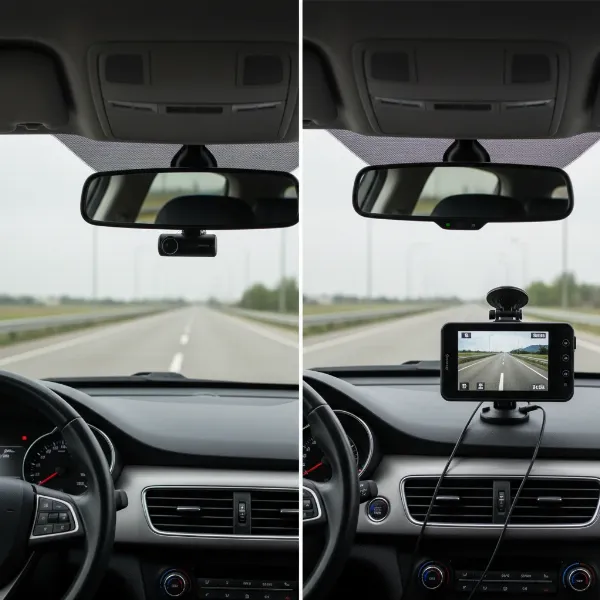 A comparison illustrating a discreet screenless dash cam hidden behind a rearview mirror and a larger dash cam with a screen visible on the dashboard.
Conclusion
Whether you choose a dash cam with a screen for its immediate accessibility or a screenless model for its stealth and minimalist appeal, both options offer robust solutions for protecting yourself and your vehicle. Screened dash cams provide direct visual confirmation and on-device control, ideal for those who prefer hands-on interaction. Screenless models excel in discretion, reduced distraction, and often boast enhanced durability and efficiency, managed conveniently through your smartphone. By carefully weighing these pros and cons against your personal driving style and priorities, you can confidently select the dash cam that best secures your journey.
What features do you value most in a dash cam, and how has your experience influenced your choice between screened and screenless options?
Frequently Asked Questions
Are screenless dash cams harder to install?
Screenless dash cams can be slightly trickier to install initially because you need to rely on a smartphone app to preview the camera’s view and ensure proper alignment. However, once set up, they are often less intrusive.
Do screenless dash cams always connect to a phone?
Most screenless dash cams utilize Wi-Fi or Bluetooth to connect to a smartphone app, allowing you to view footage, change settings, and manage recordings. Without this app integration, managing the dash cam would be significantly more challenging.
Can a dash cam with a screen be a distraction while driving?
Yes, a dash cam with a screen, especially if positioned poorly or if you frequently interact with it, can be a source of driver distraction. Many manufacturers design screens to dim or turn off automatically to mitigate this risk.
Are screenless dash cams cheaper?
Generally, screenless Dash Cams tend to be more affordable than their screened counterparts due to fewer components. However, advanced screenless models with premium features can still have a higher price point.
Which type of dash cam is better for parking surveillance?
Both types can be excellent for parking surveillance, but screenless models often have an edge due to their lower power consumption and ability to remain more discreet, reducing the risk of theft while parked. They frequently incorporate supercapacitors for better heat resistance and longevity in continuous operation.