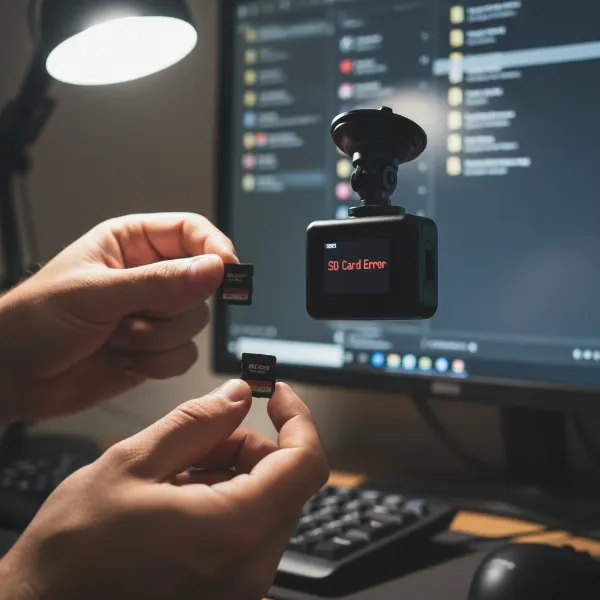
Driving or parking in scorching temperatures can turn your car’s interior into an oven, posing a significant threat to electronic devices. For dash cams, which are crucial for recording incidents and ensuring road safety, extreme heat isn’t just an inconvenience—it can be a fatal flaw, leading to malfunctions, data loss, or even permanent damage. If you live in regions where the mercury regularly soars, choosing a dash cam specifically engineered to withstand intense heat is not just a preference, but a necessity. This comprehensive guide will equip you with the knowledge to select a durable, high-performing dash cam that won’t falter under pressure, ensuring your silent witness remains vigilant on every journey, regardless of the climate.
Why Extreme Heat is a Dash Cam’s Worst Enemy
High temperatures inside a parked vehicle can easily exceed external air temperatures, often reaching 150°F (65°C) or higher on a sunny day. Such conditions are detrimental to standard electronics, and dash cams, mounted directly on the windshield, are particularly vulnerable.
The primary components at risk are the battery and internal circuitry. Lithium-ion batteries, commonly found in many electronic devices, are highly susceptible to heat. Prolonged exposure can cause them to swell, leak, lose charging capacity, or even pose a fire hazard. This degradation not only shortens the dash cam’s lifespan but also makes it unreliable, often resulting in sudden shutdowns precisely when critical footage is needed. Beyond battery issues, extreme heat can warp plastic casings, degrade image sensors, and lead to corrupted video files, compromising the very purpose of your dash cam.
Key Features of Heat-Resistant Dash Cams
To combat the intense heat, manufacturers incorporate specific design elements and technologies. Understanding these features is vital for making an informed choice.
Supercapacitors vs. Lithium-Ion Batteries
The distinction between a supercapacitor and a traditional lithium-ion battery is arguably the most critical factor for heat resistance. While lithium-ion batteries store energy chemically, supercapacitors store it electrostatically.
- Supercapacitors: These are highly durable and perform exceptionally well across a broad temperature range, typically up to 185°F (85°C). They are less prone to degradation, swelling, or explosion risks in hot environments, offering a significantly longer lifespan and more stable performance. Many premium dash cam brands, including Thinkware, BlackVue, and VIOFO, utilize supercapacitors to ensure reliability.
- Lithium-Ion Batteries: Although they can hold more power for longer parking surveillance without direct power, their operational temperature limit is generally lower, often failing above 140°F (60°C). They are prone to chemical degradation and physical damage in extreme heat, leading to premature failure.
For hot climates, a dash cam powered by a supercapacitor is the unequivocally superior choice.
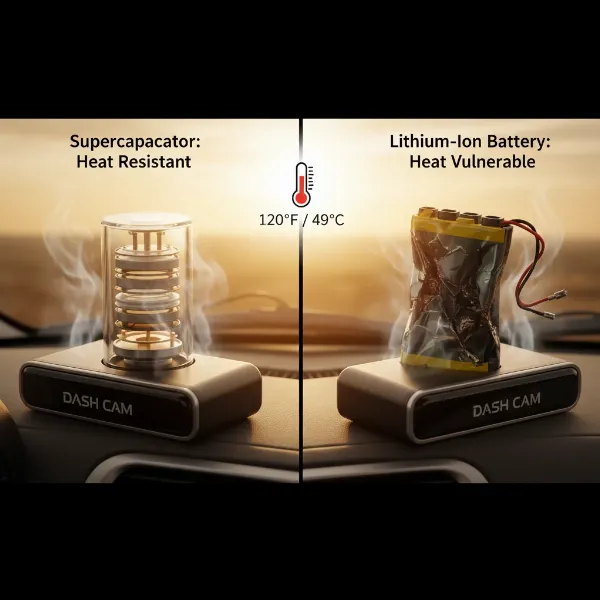 Visualizing a supercapacitor vs. a lithium-ion battery in a dash cam under extreme heat
Robust Build Quality and Ventilation
Heat-resistant dash cams often feature advanced physical designs. Look for models with:
- Durable Casing: Made from materials that can withstand high temperatures without warping or degrading.
- Efficient Ventilation: A design that allows for optimal airflow to dissipate heat away from internal components. Some models, like the Thinkware U3000, incorporate ample ventilation and heat-blocking film. The BlackVue DR770X Box even uses a unique external head unit that can be placed in a more shaded environment.
Wide Operating Temperature Range
Always check the manufacturer’s specified operating temperature range. For hot climates, a dash cam should ideally have an upper limit of at least 176°F (80°C) to ensure consistent performance during peak summer days. Some high-end models boast even higher tolerances, reaching upwards of 210°F (99°C) before shutting down.
Advanced Image Sensors
While not directly a heat-resistance feature, high-quality image sensors like Sony STARVIS are essential for reliable recording. They perform well in varying lighting conditions, including the harsh glare and shadows often found in hot, sunny environments, ensuring clear and usable footage even when heat might otherwise compromise video quality.
Types of Dash Cams for Hot Climates
Dash cams come in various configurations, each with implications for heat management.
- Front-Only Dash Cams: These are generally simpler and might generate less internal heat compared to multi-camera setups. They are a good option for drivers primarily concerned with front-view recording.
- Front and Rear Dash Cams (Dual-Channel): Offering more comprehensive coverage, these systems involve two cameras, which can cumulatively generate more heat. However, leading brands design these to manage heat effectively.
- Three-Channel Dash Cams (Front, Rear, Interior): Providing 360-degree protection, these advanced systems require robust heat management. Models like the BlackVue DR770X Box, with its separate recording unit, demonstrate innovative approaches to keep sensitive components cool.
When choosing a multi-channel system for hot climates, prioritize brands known for their superior heat resistance and consider their specific cooling solutions.
Top Dash Cams for Hot Climates (Heat Resistance Tested)
Based on extensive testing and user feedback, several dash cams consistently prove their mettle in extreme heat.
Thinkware U3000
The Thinkware U3000 stands out as a top performer in hot environments. Its design incorporates excellent ventilation and even includes heat-blocking film. It’s known for running cool even while recording in 4K resolution and features an internal Smart Parking Mode for efficient operation. This model has demonstrated reliable function in temperatures up to 196°F (91°C) during testing.
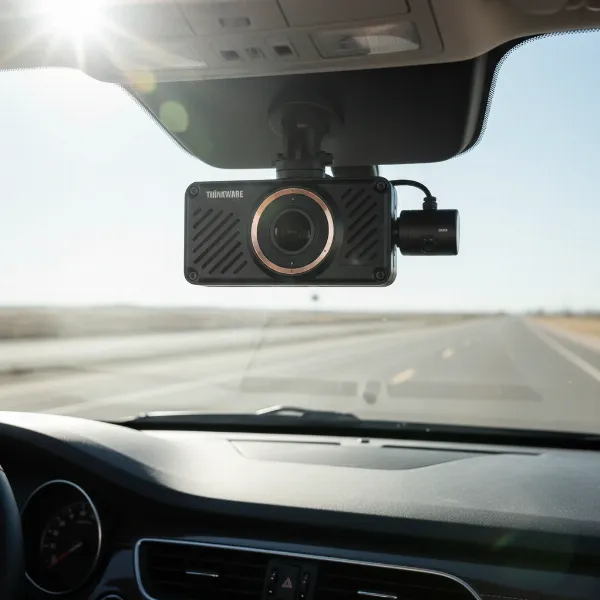 A sleek, modern heat-resistant Thinkware U3000 dash cam mounted on a car windshield, ready for hot weather
BlackVue DR770X Box
The BlackVue DR770X Box is particularly innovative for hot climates due to its unique “box” head unit design, which can be stored in a more shaded location within the vehicle, away from direct sunlight on the windshield. This separation allows for ample space and ventilation around the main processing unit, enhancing its cooling capabilities. It boasts a wide operating temperature range of -4°F to 176°F (-20°C to 80°C).
VIOFO A229 Pro Duo / A229 Plus
VIOFO models, especially the A229 Pro Duo and A229 Plus, are highly regarded for their heat resistance and use of supercapacitors. The A229 Plus, for instance, has successfully withstood temperatures up to 183°F (84°C) before shutting down, making it a reliable choice for drivers seeking a balance of performance and value in hot conditions. These models deliver crisp 4K front and 2K rear footage, crucial for capturing detail.
Vueroid D21 4K / S1 4K Infinite
Vueroid has also made a strong impression with models like the D21 4K and S1 4K Infinite, which have shown exceptional heat tolerance, with the D21 4K performing effectively up to 210°F (99°C). These cameras are designed for those who demand the absolute highest level of heat resilience.
“In environments where cabin temperatures can reach extreme levels, the distinction between a dash cam with a supercapacitor and one with a lithium-ion battery isn’t merely a feature—it’s the difference between capturing critical evidence and being left with a dead device.” – Admin, Dashcamon.com
Tips for Maximizing Your Dash Cam’s Lifespan in the Heat
Even with a heat-resistant dash cam, adopting a few simple habits can significantly extend its life and ensure optimal performance.
- Strategic Placement: Mount your dash cam strategically. The area behind your rearview mirror often provides some shade, shielding the device from direct sun exposure. Avoid mounting it in areas that receive constant, unobstructed sunlight.
- Use a Windshield Sunshade: Whenever you park your car, especially for extended periods, use a high-quality windshield sunshade. This simple accessory can drastically reduce the interior temperature of your vehicle, protecting your dash cam and other electronics.
- Consider Heat-Resistant Accessories: Specialized dash cam cooling pads or heat shields can further dissipate heat or reflect sunlight away from the device.
- Ensure Good Airflow: Make sure your dash cam is not obstructed. Adequate airflow around the unit helps prevent heat buildup. Keep air vents clear if they are near the dash cam’s location.
- Window Tint: While an investment, window tinting (especially on the front windshield, if legal in your area) can help reduce overall cabin temperature.
How to Choose the Right Heat-Resistant Dash Cam
Selecting the ideal dash cam for hot climates involves balancing heat resistance with other desired features.
- Prioritize Supercapacitors: This is non-negotiable for extreme heat reliability.
- Check Operating Temperature Range: Look for the highest upper limit you can find, ideally 176°F (80°C) or more.
- Evaluate Build Quality: A robust casing and good ventilation indicate a design engineered for durability.
- Consider Video Resolution and Features: Ensure the camera meets your needs for video clarity (e.g., 4K, 2K), parking mode capabilities, GPS, Wi-Fi, and other advanced driver-assistance systems (ADAS).
- Read Reviews and Tests: Look for independent reviews and actual heat tests, especially from users in climates similar to yours.
Conclusion
In a world where temperatures are steadily rising, investing in a dash cam built to withstand extreme heat is a smart decision for any driver. The peace of mind that comes from knowing your device will reliably record, even when your car feels like an oven, is invaluable. By prioritizing models equipped with supercapacitors, robust designs, and wide operating temperature ranges, you can ensure your dash cam acts as a dependable witness through every scorching summer and unexpected incident. Don’t let the heat compromise your safety or evidence; choose a dash cam that’s truly heat-resistant. What’s your biggest concern when selecting a dash cam for challenging climates?
Frequently Asked Questions
What temperature can a dash cam withstand before shutting down?
Most heat-resistant dash cams with supercapacitors are designed to operate reliably up to 176°F (80°C) or higher. Some top performers have been tested to withstand temperatures as extreme as 210°F (99°C) before automatically shutting down to prevent damage.
Are all dash cams heat resistant?
No, not all dash cams are designed for extreme heat. Many budget-friendly models use lithium-ion batteries that are prone to swelling, degradation, and failure when exposed to high temperatures, making them unreliable in hot climates. Always check the specifications for operating temperature range and power source.
What is a supercapacitor in a dash cam, and why is it better for heat?
A supercapacitor is an energy storage device that uses an electrostatic process, unlike traditional batteries that use chemical reactions. This fundamental difference makes supercapacitors far more stable and resistant to extreme temperatures, preventing swelling, leakage, or explosion risks commonly associated with lithium-ion batteries in hot conditions.
Can using a windshield sunshade really help my dash cam in the heat?
Absolutely. A windshield sunshade can significantly lower the internal temperature of your parked car, thereby reducing the heat exposure for your dash cam. This simple accessory is a highly effective, low-cost method to extend the lifespan and reliability of your dash cam, especially in sunny and hot climates.
What happens if my dash cam overheats?
If a Dash Cam overheats, it typically has built-in safety mechanisms that force it to shut down to prevent permanent damage. This means it will stop recording, potentially missing crucial footage. Prolonged or repeated overheating can also lead to battery swelling (if battery-powered), internal component degradation, and corrupted video files.