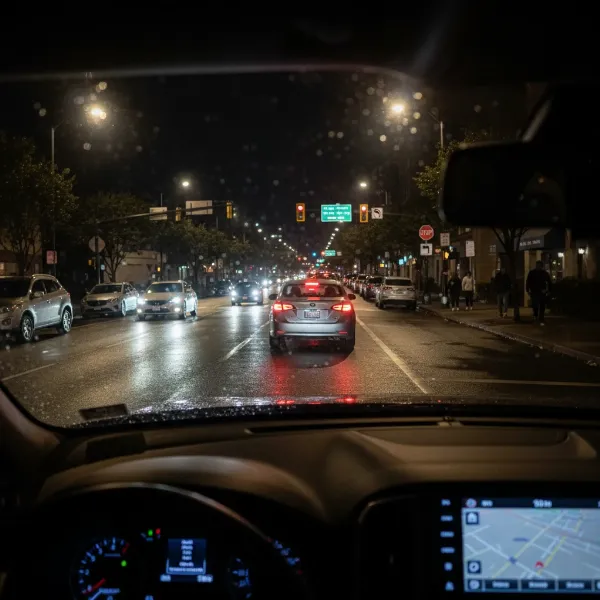
In today’s fast-paced world, where every journey holds potential for the unexpected, a dash cam has become more than just an accessory—it’s a silent witness and a crucial safeguard. With an array of options available, one of the most pressing questions drivers face is about resolution: is a 4K dash cam truly a worthwhile upgrade over the widely popular 1080p models? As someone deeply immersed in dash cam technology, I understand the nuances that separate seemingly similar devices. This guide will cut through the marketing noise to help you make an informed decision, ensuring your peace of mind on the road.
Choosing the Best Dash Cam: A Comprehensive Guide
Selecting the right dash cam involves weighing several critical factors beyond just resolution. You need a device that reliably captures crucial moments, withstands varying conditions, and offers features that genuinely enhance your driving safety and convenience. Understanding these criteria will lay the foundation for deciding if a higher-resolution model fits your specific needs.
Popular Dash Cam Types
|
Our Picks for the Best Dash Cam in 2026
As an Amazon Associate I earn from qualifying purchases.
|
||
| Num | Product | Action |
|---|---|---|
| 1 | REDTIGER 4K Dash Cam Front Rear, STARVIS 2 Sensor, Free Card Included, 5.8GHz WiFi-20MB/s Fast Download, Dash Camera for Cars with GPS, WDR Night Vision, 170°Wide Angle, 24H Parking Mode(F7NP) |

|
| 2 | VIOFO A229 Plus Dash Cam Front and Rear, Dual STARVIS 2 Sensors, 2 Channel HDR, 1440P+1440P Voice Control Car Dash Camera, 5GHz Wi-Fi, Voice Control, Ultra-Precise GPS |
|
| 3 | 4K Dash Cam Front, Built-in 5G WiFi, 64GB Card Included, Dash Camera for Cars, Mini Dashcam with Super Night Vision, Loop Recording, G-Sensor, 24 Hours Parking Monitor, Support 256GB Max |
|
| 4 | Dual 4K Dash Cam Front and Rear - Free 64G SD Card, 2160P+2160P UHD Dash Camera for Cars, Dashcam with 176°+160° Wide Angle, 3.5'' IPS Screen Dashcam, G-Sensor, WDR, Night Vision, 24H Parking Monitor |
|
| 5 | 4K+4K Dash Cam Front and Rear, Free 128GB Card Included, 5.8GHz WiFi Dash Camera for Cars, Built-in GPS, G-Sensor, 170°Wide Angle, 3" IPS Screen, 24H Parking Mode, Support 512GB Max |
|
| 6 | Dash Cam Front and Rear, 2.5K Dual Dash Camera for Cars, 2560P Mini Car Camera, 2 inch IPS Screen, 32GB Card Included, WDR Night Vision, 24 Hours Parking Monitor, G-Sensor, Support 256 GB Max |
|
| 7 | WOLFBOX G840S 12" 4K Mirror Dash Cam Backup Camera, 5.8GHz WiFi Smart Rearview Mirror for Cars & Trucks, Front and Rear View Dual Cameras, Night Vision, Parking Assistance, Included 32GB Card & GPS |
|
| 8 | Dash Cam Front and Rear, 1080P Dash Camera for Cars, 3 Channel Car Camera Front Rear and Inside with 32GB Card, Loop Recording, Night Vision, HDR, 24Hr Parking, G-Sensor |
|
| 9 | Garmin Dash Cam™ Mini 3, Ultracompact 1080p HD Dash Cam with a 140-degree Field of View, Built in Clarity™ Polarizer, Voice Controlled, Automatic Recording |
|
| 10 | ROVE R2-4K DUAL Dash Cam Front and Rear, STARVIS 2 Sensor, FREE 128GB Card Included, 5G WiFi - up to 20MB/s Fastest Download Speed with App, 4K 2160P/FHD Dash Camera for Cars, 3" IPS, 24H Parking Mode |
|
Dash cams come in various configurations, each designed for different coverage needs. A front-only dash cam records the road ahead, serving as basic incident protection. Front and rear dash cams offer broader coverage, capturing events both in front of and behind your vehicle, which is invaluable in multi-vehicle incidents. For rideshare drivers or those seeking comprehensive interior monitoring, three-channel dash cams add an inward-facing camera. Finally, rearview mirror dash cams integrate discreetly into your vehicle’s mirror, offering a less intrusive profile while typically providing front and rear recording.
Key Criteria for Selecting a Dash Cam
When evaluating dash cams, consider these essential factors:
- Image Quality and Resolution: This is paramount. Higher resolution, like 4K, generally means more pixels, leading to clearer, more detailed footage that can be crucial for identifying specifics like license plates or facial features. However, raw pixel count isn’t the only metric; sensor quality, aperture, and dynamic range also play significant roles in overall clarity, especially in low-light conditions.
- Essential Features:
- G-Sensor: Automatically detects impacts and locks the current footage to prevent overwriting.
- GPS: Records speed and location data, providing valuable context in an accident report.
- Loop Recording: Ensures continuous recording by overwriting the oldest unlocked files.
- Parking Mode: Monitors your vehicle when parked, typically triggering recording upon impact or motion, consuming less power to protect your battery.
- ADAS (Advanced Driver Assistance Systems): Features like lane departure warnings or forward collision alerts offer an extra layer of safety, often found in more advanced dash cams.
- Durability and Reliability: A dash cam must endure extreme temperatures, vibrations, and continuous operation. Look for models built with robust components and proper heat management, especially if you live in a hot climate.
- Brand Reputation: Choosing reputable brands often ensures better product quality, reliable firmware updates, and responsive customer support.
4K vs. 1080p Dash Cams: Is the Resolution Upgrade Worth It?
The debate between 4K and 1080p resolution is at the heart of many dash cam purchasing decisions. While both offer valuable recording capabilities, their differences can significantly impact their utility in critical situations.
Understanding the Resolution Difference
At its core, resolution refers to the number of pixels in an image. A 1080p dash cam (Full HD) records at 1920 x 1080 pixels, providing a clear image suitable for most general driving scenarios. In contrast, a 4K dash cam (Ultra HD) boasts a resolution of 3840 x 2160 pixels, which is four times the total pixel count of 1080p. This dramatic increase in pixels translates directly into enhanced detail and clarity.
Clarity and Detail: The Unmistakable Advantage of 4K
The most compelling argument for a 4K dash cam is its superior ability to capture fine details. In an accident, being able to clearly read a license plate, identify a specific street sign, or even discern facial features can be the difference between a clear insurance claim and an unresolved incident. While 1080p footage can provide general evidence, zooming in on 4K video often reveals details that would remain pixelated and illegible in 1080p, especially at a distance or at higher speeds. This enhanced clarity makes 4K footage a stronger form of legal evidence.
Night Vision Performance
While resolution itself isn’t the sole determinant of night vision quality, 4K dash cams often incorporate better sensor chips and advanced imaging technologies like Sony STARVIS sensors and HDR (High Dynamic Range) processing. This combination allows 4K models to capture more light and detail in low-light environments, making license plates and other crucial elements more discernible even in dim conditions or challenging weather. A higher resolution combined with a superior sensor generally leads to better overall night performance than a basic 1080p unit.
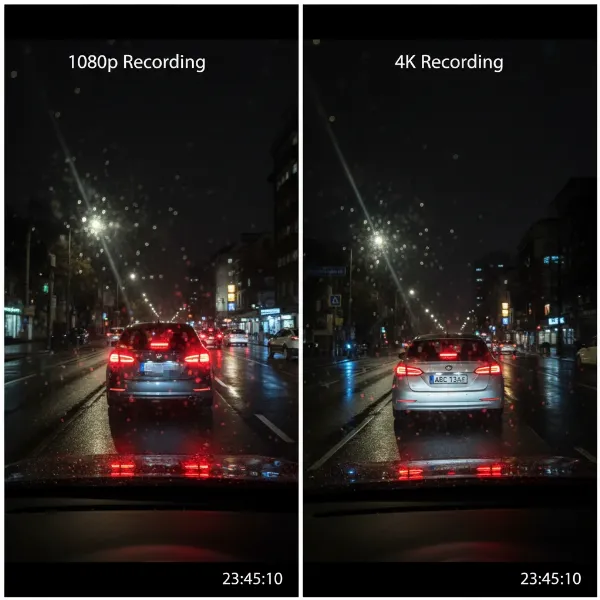 Comparison of 4K and 1080p dash cam footage at night, highlighting license plate readability differences.
File Size and Storage Demands
The increased detail of 4K comes at a cost: significantly larger file sizes. A single minute of 4K footage can consume around 160MB to 200MB of storage. This means that 4K dash cams require larger capacity SD cards (typically 64GB or higher is recommended) and faster write speeds (Class 10 or U3 UHS-I) to handle the data flow without errors. For continuous loop recording, this higher storage consumption means older files will be overwritten more quickly compared to a 1080p dash cam with the same-sized card. Conversely, 1080p dash cams are more storage-efficient, allowing for longer recording times on smaller cards.
Cost and Processing Power
Unsurprisingly, 4K dash cams are generally more expensive than their 1080p counterparts. This higher price reflects the advanced sensors, more powerful processors, and sometimes additional features integrated into 4K models. The increased processing demands for encoding 4K video can also lead to higher power consumption and potentially more heat generation, which is a consideration for the device’s longevity, especially in extreme climates.
When 1080p is Enough
For many drivers, a 1080p dash cam remains a perfectly viable and practical choice. If your primary need is basic incident recording, general road documentation, and you’re operating on a tighter budget, a 1080p model offers excellent value. It provides sufficient clarity for most driving scenarios and is less demanding on storage and processing. If identifying fine details from a distance isn’t a frequent concern, or if you drive mainly in well-lit, lower-traffic conditions, 1080p may comfortably meet your needs.
When 4K Shines: The Upgrade is Worth It
The upgrade to 4K becomes unequivocally worth it for drivers who prioritize maximum clarity and evidentiary strength. This includes:
- Professional Drivers: Taxi, rideshare, or delivery drivers who spend extensive time on the road in varied conditions.
- High-Traffic Urban Environments: Where the chances of minor incidents or hit-and-runs are higher, and identifying vehicle details is critical.
- Insurance and Legal Peace of Mind: For those who want the absolute best chance of proving fault or identifying culprits in an accident or vandalism.
- Long-Distance Commuters: Where capturing unexpected events at higher speeds or in changing lighting conditions is important.
> “The true value of a dash cam isn’t just in recording, but in capturing details that matter when it counts. 4K often delivers that critical edge, especially for license plates and distant objects.” – Admin, Dashcamon.com, Dash Cam Expert
Recommended Dash Cam Models
When considering either a 4K or 1080p dash cam, look for models that combine resolution with other crucial features for optimal performance.
For 4K Clarity
High-end 4K models often feature advanced image sensors (like Sony STARVIS 2), Wide Dynamic Range (WDR) or High Dynamic Range (HDR) for improved exposure in varying light, and robust heat management systems. These cameras are designed for maximum detail and reliability under challenging conditions. Many also offer dual-channel (front and rear) 4K recording, providing comprehensive high-resolution coverage.
For Reliable 1080p Performance
Quality 1080p dash cams should still offer excellent foundational features. Look for models with good lens optics, a reliable processor, G-sensors, loop recording, and optional GPS. Some 1080p cameras also include basic parking mode functionality, offering decent protection without the higher cost and storage demands of 4K. While they may not capture every tiny detail, a well-engineered 1080p dash cam provides solid evidence for common incidents.
Dash Cam Buying and Usage Guide
Once you’ve decided on the ideal resolution, a few practical considerations will ensure you get the most out of your dash cam.
Where to Buy Your Dash Cam
Reputable online retailers, specialized automotive electronics stores, and direct from manufacturer websites are generally the best places to purchase. Always check reviews and warranties. While budget options might be tempting, investing in a quality dash cam from a trusted source can save you headaches in the long run.
Installation Tips
- Optimal Placement: Mount your dash cam high on the windshield, usually behind the rearview mirror, to ensure a clear view of the road without obstructing your vision.
- Power Connection: Most dash cams connect to your vehicle’s 12V power outlet. For parking mode functionality, hardwiring to your car’s fuse box is often necessary and recommended for continuous power without draining your main battery. Professional installation is advisable for hardwiring.
- Cable Management: Neatly tuck cables along the windshield trim and under the dashboard to keep your interior tidy and prevent distractions.
Usage and Maintenance
- SD Card Maintenance: Regularly format your SD card (e.g., once a month) to maintain its health and performance, preventing data corruption. Replace the SD card every 6-12 months, as they have a finite lifespan, especially with constant overwriting.
- Firmware Updates: Check for firmware updates from the manufacturer. These can improve performance, add features, and fix bugs.
- Lens Cleaning: Keep the dash cam lens clean with a soft cloth to ensure clear footage.
- Temperature Considerations: If parking in extreme heat, consider a dash cam with supercapacitor technology, which is more resistant to temperature fluctuations than traditional batteries.
Frequently Asked Questions
Is 4K dash cam footage always better than 1080p?
Generally, yes, 4K footage provides significantly more detail and clarity, making it easier to identify crucial information like license plates. However, a high-quality 1080p dash cam with a good sensor can still outperform a cheap 4K camera with a poor sensor or upscaled resolution.
How much storage do I need for a 4K dash cam?
For a 4K dash cam, a minimum of 64GB SD card is recommended, with 128GB or 256GB being ideal for longer recording times before overwriting. Ensure it’s a high-speed card (UHS Speed Class 3/U3) for optimal performance.
Will a 4K dash cam drain my car battery faster in parking mode?
4K dash cams generally consume more power than 1080p models due to higher processing demands. In parking mode, this could lead to faster battery drain if not properly managed. Hardwiring kits with voltage cutoff protection are essential to prevent this.
Conclusion
The decision between a 4K and 1080p dash cam ultimately boils down to your priorities, budget, and specific driving environment. While 1080p models offer reliable basic protection and are more budget-friendly, the superior clarity and detail provided by 4K dash cams offer an undeniable advantage when it comes to capturing critical evidence. For those who prioritize unparalleled video quality, robust legal evidence, and enhanced peace of mind, especially in complex driving scenarios, the resolution upgrade to a 4K Dash Cam is indeed a smart and necessary investment. What level of detail do you truly need to feel safe and protected on your journeys?