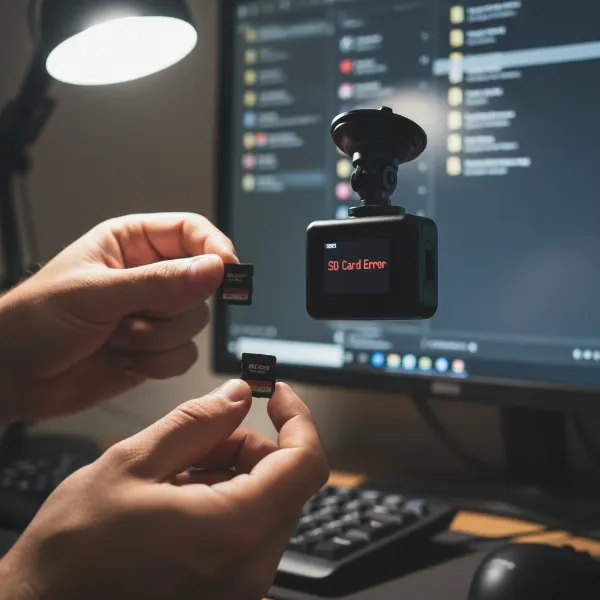
Imagine a world where your car’s watchful guardian, a dash cam, operates seamlessly without a tangle of wires, ready to capture every critical moment, even when you’re away. The promise of “wireless” and “battery-powered” dash cams often conjures this ideal. While truly wire-free, continuously operating dash cams for daily driving remain largely a niche concept, the market offers sophisticated solutions that combine wireless connectivity with intelligent power options to deliver unparalleled convenience and security.
This comprehensive guide will demystify what “wireless” and “battery-powered” truly mean in the context of modern dash cams, exploring the various power sources, essential features, and top models available in 2024. Our goal is to equip you with the knowledge to select the perfect dash cam solution that aligns with your specific needs, ensuring safety and peace of mind on every journey.
Understanding “Wireless” in Dash Cams
When a dash cam is described as “wireless,” it typically refers to its connectivity features rather than its power supply. These devices leverage various wireless technologies to enhance user experience and functionality.
- Wi-Fi and Bluetooth Connectivity: The most common form of “wireless” in dash cams involves built-in Wi-Fi or Bluetooth. This allows your dash cam to connect wirelessly to your smartphone or tablet via a dedicated app. You can then instantly view, download, and share recorded footage without having to remove the microSD card. Wi-Fi 6 and 5G Wi-Fi standards offer faster transfer speeds, crucial for downloading large 4K video files. Bluetooth, on the other hand, often provides quicker initial pairing and low-power connections.
- 4G/LTE for Remote Monitoring: More advanced “wireless” dash cams incorporate 4G/LTE cellular connectivity. This transforms your dash cam into a connected security hub, enabling features like live remote viewing of your vehicle from anywhere, instant impact notifications to your phone, and cloud storage for crucial footage. These features typically require a separate data plan or subscription.
- Dispelling the “Wire-Free” Myth: It’s important to understand that most dash cams, even those marketed as “wireless,” still require a constant power source for continuous operation while driving and often for extended parking mode. They are “wireless” for data transfer, not typically for power over long periods. The expectation of a dash cam running purely on an internal battery for continuous, long-term recording is often unrealistic due to current battery technology limitations and safety concerns.
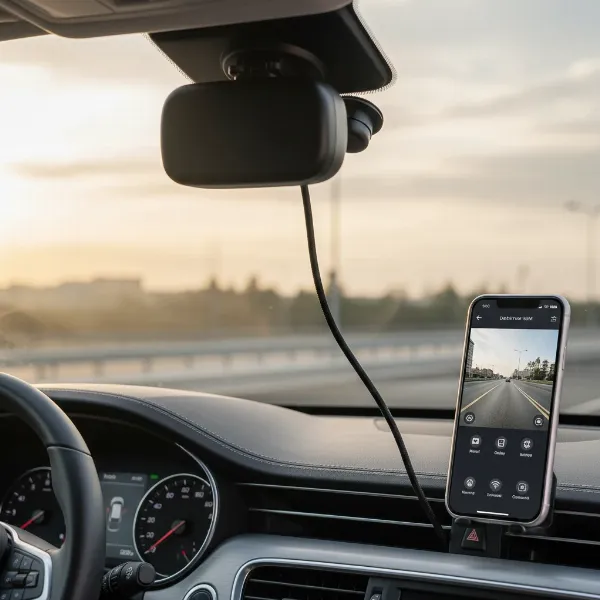 Modern dash cam with visible power cable, connected wirelessly to a smartphone.
Powering Your Dash Cam: Internal Batteries vs. Supercapacitors vs. External Packs
The method a dash cam uses for power is crucial, particularly when considering “battery-powered options.” The right choice depends on your climate, parking habits, and desired level of security.
Internal Lithium-Ion Batteries
Some dash cams come equipped with small internal lithium-ion (Li-ion) batteries. These are generally found in more budget-friendly models.
- Pros: Li-ion batteries offer a self-contained power source for a short duration, allowing the camera to record for a few minutes after the engine is turned off or to safely shut down and save the last recording during a sudden power loss. They also offer simple plug-and-play installation initially.
- Cons: The primary drawbacks are significant. Li-ion batteries are highly susceptible to extreme temperatures; they can degrade rapidly, swell, and even pose a fire risk in hot car interiors. Their capacity is usually very limited, offering only short parking mode durations (often less than an hour) before draining. Their lifespan is also generally shorter than supercapacitors when subjected to constant charging and discharging cycles in a vehicle.
|
Our Picks for the Best Dash Cam in 2026
As an Amazon Associate I earn from qualifying purchases.
|
||
| Num | Product | Action |
|---|---|---|
| 1 | 4K+4K Dash Cam Front and Rear, Free 128GB Card Included, 5.8GHz WiFi Dash Camera for Cars, Built-in GPS, G-Sensor, 170°Wide Angle, 3" IPS Screen, 24H Parking Mode, Support 512GB Max |

|
| 2 | REDTIGER 4K Dash Cam Front Rear, STARVIS 2 Sensor, Free Card Included, 5.8GHz WiFi-20MB/s Fast Download, Dash Camera for Cars with GPS, WDR Night Vision, 170°Wide Angle, 24H Parking Mode(F7NP) |
|
| 3 | Dual 4K Dash Cam Front and Rear - Free 64G SD Card, 2160P+2160P UHD Dash Camera for Cars, Dashcam with 176°+160° Wide Angle, 3.5'' IPS Screen Dashcam, G-Sensor, WDR, Night Vision, 24H Parking Monitor |
|
| 4 | Garmin Dash Cam™ Mini 3, Ultracompact 1080p HD Dash Cam with a 140-degree Field of View, Built in Clarity™ Polarizer, Voice Controlled, Automatic Recording |
|
| 5 | WOLFBOX G840S 12" 4K Mirror Dash Cam Backup Camera, 5.8GHz WiFi Smart Rearview Mirror for Cars & Trucks, Front and Rear View Dual Cameras, Night Vision, Parking Assistance, Included 32GB Card & GPS |
|
| 6 | Dash Cam Front and Rear, 2.5K Dual Dash Camera for Cars, 2560P Mini Car Camera, 2 inch IPS Screen, 32GB Card Included, WDR Night Vision, 24 Hours Parking Monitor, G-Sensor, Support 256 GB Max |
|
| 7 | 4K Dash Cam Front, Built-in 5G WiFi, 64GB Card Included, Dash Camera for Cars, Mini Dashcam with Super Night Vision, Loop Recording, G-Sensor, 24 Hours Parking Monitor, Support 256GB Max |
|
| 8 | ROVE R2-4K DUAL Dash Cam Front and Rear, STARVIS 2 Sensor, FREE 128GB Card Included, 5G WiFi - up to 20MB/s Fastest Download Speed with App, 4K 2160P/FHD Dash Camera for Cars, 3" IPS, 24H Parking Mode |
|
| 9 | Dash Cam Front and Rear, 1080P Dash Camera for Cars, 3 Channel Car Camera Front Rear and Inside with 32GB Card, Loop Recording, Night Vision, HDR, 24Hr Parking, G-Sensor |
|
| 10 | VIOFO A229 Plus Dash Cam Front and Rear, Dual STARVIS 2 Sensors, 2 Channel HDR, 1440P+1440P Voice Control Car Dash Camera, 5GHz Wi-Fi, Voice Control, Ultra-Precise GPS |
|
Supercapacitors
A growing number of mid-to-high-end dash cams are moving away from Li-ion batteries in favor of supercapacitors.
- Pros: Supercapacitors are significantly safer and more durable. They can withstand extreme temperatures, from freezing cold to scorching heat, without degradation or safety risks like swelling or overheating. This makes them ideal for environments where car interiors can reach high temperatures. They also boast a much longer lifespan and can endure more charge/discharge cycles.
- Cons: The main limitation is their energy storage capacity. Supercapacitors hold very little power—just enough for the dash cam to safely shut down and save the last recorded file (a few seconds) when vehicle power is cut. For any form of extended parking mode, a supercapacitor-based dash cam must be hardwired to the car’s fuse box or connected to an external battery pack.
Dedicated External Battery Packs (LiFePO4)
For drivers seeking extended parking surveillance without hardwiring directly into their car’s electrical system, dedicated external battery packs are the optimal solution.
- Pros: These specialized battery packs, often utilizing Lithium Iron Phosphate (LiFePO4) cells, can provide many hours, or even days, of parking mode recording without drawing power from your car’s battery. LiFePO4 chemistry is more stable and safer than standard Li-ion, making it suitable for automotive environments. They recharge from your car’s power source only when the engine is running, preserving your vehicle’s battery.
- Cons: External battery packs represent an additional cost and require some installation, though often less complex than hardwiring the dash cam itself. They take up additional space in the vehicle. Examples include the BlackboxMyCar PowerCell 8, BlackVue B-130X, and Thinkware iVolt Xtra.
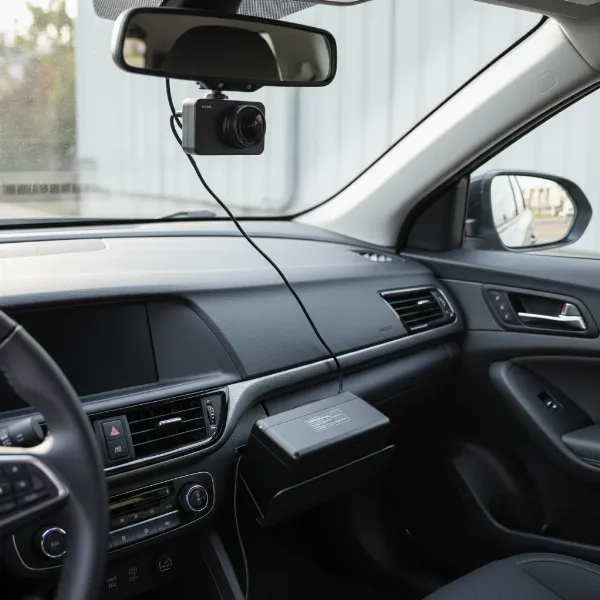 Dash cam connected to a dedicated external LiFePO4 battery pack for parking surveillance.
Truly Wire-Free (Solar-powered/Rechargeable Security Cameras)
A niche category exists for dash cams that operate without any power cables during their active recording period, often using internal high-capacity batteries with solar charging.
- Pros: These devices offer ultimate flexibility and portability, making them easy to install, reposition, or transfer between vehicles. They are genuinely wire-free in terms of their power source for a period. Examples like the eufy 4G LTE Cam S330 or Reolink Argus Track often integrate solar panels to extend battery life, making them suitable for remote monitoring or specific security needs.
- Cons: Their primary limitation is continuous recording duration, as the internal battery eventually requires recharging. They may not be designed for the rigors of continuous driving recording that traditional dash cams handle, and their integration with vehicle systems might be less robust.
Key Features to Look for in a Wireless Dash Cam
Beyond power solutions, several features are paramount when selecting a high-quality wireless dash cam.
- Video Resolution and Quality: Look for dash cams offering at least 1080p Full HD. For superior detail, especially for capturing license plates and road signs, 2K (1440p) or 4K (2160p) resolution is recommended. High Dynamic Range (HDR) and STARVIS sensors significantly improve low-light and night vision performance.
- Field of View (FoV): A wider lens (140-170 degrees) captures more of the road and surroundings. While beneficial, be aware that excessively wide angles can introduce fish-eye distortion.
- Parking Mode Options: This is critical for vehicle security when parked. Common modes include:
- Motion Detection: Records when movement is detected around the vehicle.
- Impact/G-Sensor Detection: Records when an impact is registered.
- Time-lapse: Continuously records at a low frame rate, condensing hours of footage into minutes.
- Low-Power Parking Mode: Minimizes power consumption by only waking up to record significant events.
- GPS and G-Sensor: GPS records your speed and location, providing crucial evidence in case of an incident. A G-sensor (accelerometer) detects sudden impacts or harsh braking and automatically locks the corresponding footage to prevent overwriting.
- App Connectivity and Cloud Storage: A reliable companion app is essential for wireless dash cams, allowing easy access to footage, settings adjustments, and firmware updates. Cloud storage, often subscription-based, provides an off-device backup of critical recordings, protecting against theft or damage to the dash cam itself.
- Temperature Durability: Given that dash cams operate inside vehicles, often exposed to direct sunlight, ensure the device is built to withstand extreme temperatures. Supercapacitor-based models excel here.
- Ease of Installation: Wireless dash cams generally offer easier installation due to fewer cable management concerns (for data transfer). For power, options range from simple cigarette lighter plugs to more involved hardwiring or external battery pack setups.
Top Wireless Dash Cam Models with Battery-Powered Capabilities
While truly “wire-free continuous recording” for traditional dash cams is rare, here are some top wireless dash cams that offer excellent connectivity and various power solutions, including battery-powered options for specific functions or external battery pack compatibility.
- Garmin Dash Cam Mini 3: This ultra-compact dash cam is lauded for its discreet design and reliable Wi-Fi connectivity. It records in crisp 1080p and uses a small internal battery primarily for emergency shutdown. Advanced features like live view and parking guard often require a subscription and a constant power source. Its small size makes it almost invisible on the windshield.
- Miofive S1: Offering impressive 4K recording quality and 5G Wi-Fi for fast downloads, the Miofive S1 is a strong contender for those prioritizing video clarity. It features a durable supercapacitor, meaning it needs a hardwiring kit (not always included) for continuous 24-hour parking monitoring.
- 70mai Omni: This dash cam stands out with its unique 360-degree rotating lens, eliminating blind spots around your vehicle. It records in 4K and uses Wi-Fi 6 for quick file transfers. Like other supercapacitor-based models, it will require additional hardware (such as a hardwire kit or dedicated battery pack) for full 24/7 parking surveillance.
- Nextbase iQ: More than just a dash cam, the Nextbase iQ functions as a comprehensive car security hub. It features 4G/LTE connectivity for live remote viewing, advanced AI-driven monitoring, and emergency SOS functions. While it offers advanced “wireless” remote features, its extensive capabilities typically necessitate a hardwired installation for continuous power and parking mode functionality.
- External Battery Packs for Enhanced Parking Mode: For nearly any dash cam that relies on supercapacitors or has a minimal internal battery, pairing it with a dedicated external battery pack like the BlackboxMyCar PowerCell 8, BlackVue B-130X, or Thinkware iVolt Xtra is the best way to achieve extended parking surveillance without draining your car battery. These provide hours to days of power and recharge while you drive.
- Eufy 4G LTE Cam S330 (Niche Wire-Free Option): For specific scenarios where ultimate wire-free flexibility is paramount (e.g., temporary security, monitoring a parked trailer, off-grid locations), solutions like the eufy 4G LTE Cam S330 offer 4K resolution, 360-degree coverage, and built-in solar panels to keep its powerful internal battery charged. It’s more akin to a portable security camera that can be adapted for vehicle use, rather than a traditional continuous-recording dash cam.
Choosing the Right “Wireless, Battery-Powered” Solution for You
Selecting the ideal dash cam involves a careful evaluation of your personal driving habits, parking environment, and priorities.
- For Daily Commuters seeking convenience: A compact Wi-Fi enabled dash cam like the Garmin Dash Cam Mini 3, paired with a reliable hardwire kit for parking mode (if desired), offers a balance of ease of use and discreet protection.
- For Comprehensive Parking Surveillance: If extended monitoring when parked is your top priority, consider a high-quality dash cam (like Miofive S1 or 70mai Omni) combined with a dedicated external LiFePO4 battery pack. This provides robust parking mode without stressing your car’s battery.
- For Extreme Climates or Enhanced Safety: Dash cams with supercapacitors are highly recommended due to their superior heat and cold resistance. Remember to hardwire them for full parking mode functionality.
- For Remote Monitoring and Advanced Features: The Nextbase iQ offers cutting-edge features but comes at a higher price and requires 4G/LTE connectivity and typically hardwired power for constant vigilance.
- For True Wire-Free, Temporary Use: If you need a camera that can be easily moved, installed without any wiring, and primarily used for occasional monitoring or specific security events, a solar-powered security camera adaptable for car use, like the Eufy 4G LTE Cam S330, might be a suitable alternative.
Ultimately, the best wireless dash cam with “battery-powered options” is the one that best fits your lifestyle, budget, and peace of mind requirements.
Conclusion
The evolution of dash cam technology has brought us closer to the ideal of seamless, intelligent vehicle security. While the dream of a truly wire-free dash cam that continuously records without any external power connection for extended periods remains largely aspirational for traditional models, significant advancements in “wireless” connectivity and “battery-powered” solutions have revolutionized how we protect our vehicles. From supercapacitors that brave extreme temperatures to external battery packs offering days of parking surveillance, and even niche solar-powered wire-free alternatives, there’s a solution tailored for almost every need.
By understanding the distinctions between internal batteries, supercapacitors, and external power solutions, and by prioritizing features like high-resolution recording, robust parking modes, and reliable app connectivity, you can make an informed decision. Don’t let the quest for perfect “wireless, battery-powered” obscure the best available options; instead, embrace the current innovations that deliver convenience, safety, and security.
What specific aspect of dash cam security are you looking to enhance in your vehicle?
Frequently Asked Questions
Are there any truly wireless dash cams that don’t need any wires for power?
Truly wireless dash cams that operate without any power wires for continuous recording, even while driving, are rare. Most “wireless” dash cams refer to Wi-Fi/Bluetooth for data transfer. However, some security cameras, like the eufy 4G LTE Cam S330, are designed to be wire-free with large internal batteries and often solar charging, suitable for temporary or remote vehicle monitoring, though not typically for 24/7 continuous driving recording like traditional dash cams.
How long do battery-powered dash cams last in parking mode?
The duration a battery-powered dash cam can last in parking mode varies significantly. Dash cams with small internal lithium-ion batteries typically last from a few minutes to an hour. For extended parking surveillance, external dedicated battery packs (e.g., LiFePO4) can power a dash cam for 24-35 hours or even longer, depending on the pack’s capacity and the dash cam’s power consumption.
Why do most dash cams use supercapacitors instead of batteries?
Most mid-to-high-end dash cams use supercapacitors due to their superior safety and durability, especially in extreme temperatures. Supercapacitors are less prone to overheating, swelling, or posing fire risks compared to lithium-ion batteries. While they only store enough power for a safe shutdown (a few seconds), their reliability and longer lifespan make them a preferred choice for longevity in a vehicle environment.
Can I use a regular USB power bank to power my dash cam?
While a regular USB power bank can provide short-term power for your dash cam, it’s generally not recommended for long-term or dedicated parking mode use. Car interiors can reach high temperatures that are unsafe for standard power banks, potentially leading to damage or safety hazards. Dedicated dash cam battery packs are designed with more resilient LiFePO4 cells to withstand vehicle conditions.
What is the safest battery type for a dash cam in hot weather?
For optimal safety and performance in hot weather, Dash Cams with supercapacitors are the safest option as they are highly resistant to extreme temperatures and do not rely on chemical reactions that can cause overheating or swelling in standard lithium-ion batteries. If an external battery pack is used for parking mode, those utilizing LiFePO4 (Lithium Iron Phosphate) chemistry are recommended for their enhanced thermal stability.